

Every removable case that comes back for a reline began with one short conversation. Dentures vs dental implants, settled chairside in ten minutes. Patients shorten it to dentures vs implants, as if the answer were obvious. It isn't. That call shapes the prosthesis, the recall schedule and how well someone chews.
Both restorations answer the same problem, and the mechanics diverge from there. Dentures rest on the gums and the ridge underneath, while dental implants are anchored in bone. Our range of digital dental products covers both routes. Whether dentures or implants reach the plan, that support difference explains nearly every later trade-off.
Dentures are removable prosthetic devices designed to replace missing teeth across a full or partial arch. Full dentures replace a complete arch, while partial dentures fill the spaces around remaining natural teeth. After tooth loss, each artificial tooth sits in an acrylic base. Modern dentures are made from printed acrylic, a fit traditional dentures never matched.
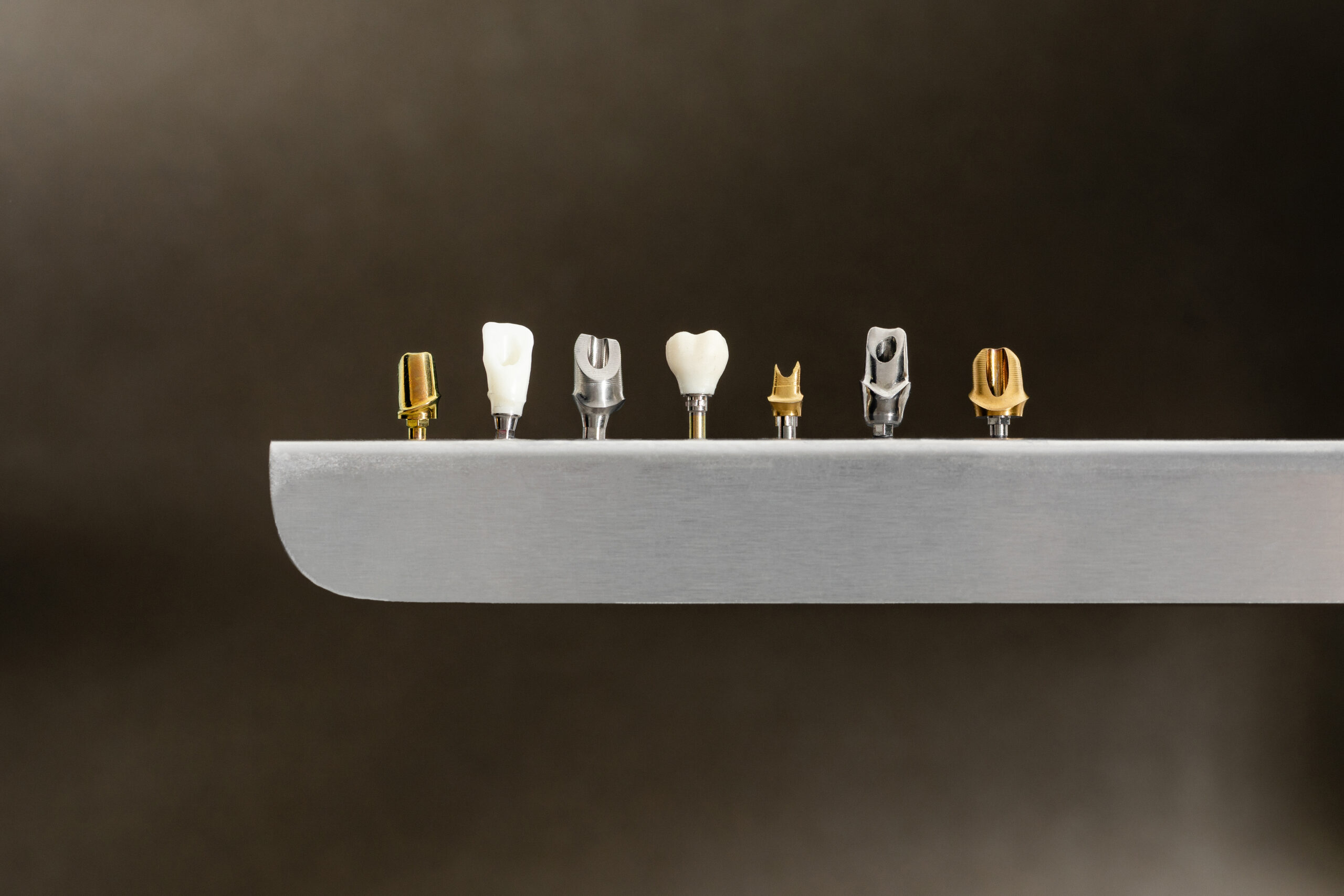
A dental implant behaves differently. Implants are titanium posts surgically placed into the jawbone, and each titanium post takes over the job of a tooth root. After healing, implants integrate with bone and carry a crown, a bridge or one of our precision-machined implant bars. They load much like natural teeth.
With the support mechanism settled, the comparison turns practical. A 2026 Statistics Canada study on oral health found that 27.6% of adults in Canada replace missing teeth with a prosthesis.1 So this conversation runs daily in most clinics. Three variables decide the outcome: chewing efficiency, bone preservation and long-term maintenance.
In practice, the two tooth replacement options compare like this:
Time horizon changes the cost comparison completely. Conventional dentures cost less upfront but may age poorly. Over a decade, dentures may need repairs, relines and a full replacement. Implants are far heavier at the start, between surgery and components. The Canadian Dental Association's guidance on denture care sets out that maintenance load.
Bone volume and patient priorities drive the choice between dentures and implants. Dental implants require enough jawbone, controlled oral health and consistent dental hygiene. A good candidate for implants also keeps regular dental check-ups. Many patients still prefer dentures, and implant-supported dentures attach to dental implants. Our combined fixed and removable works handle both halves.
Discuss your next tooth replacement case with our advisory team
Dentures are removable appliances that sit on top of your gums, while dental implants are surgically fixed in the jawbone. That difference drives comfort, chewing force and bone preservation. Dentures replace the visible replacement teeth, and implants replace the tooth root too.
Five to ten years is typical before a reline or a remake, since the ridge keeps resorbing underneath. Implants are a long-term tooth replacement solution, and many stay functional for decades. Both depend on maintenance rather than luck.
There's no single best tooth replacement option, and age alone decides nothing. Bone volume, medication, manual dexterity and budget all weigh in. Complete dentures are usually still fine for seniors who wear dentures comfortably, while implants suit patients with healthy gums.
