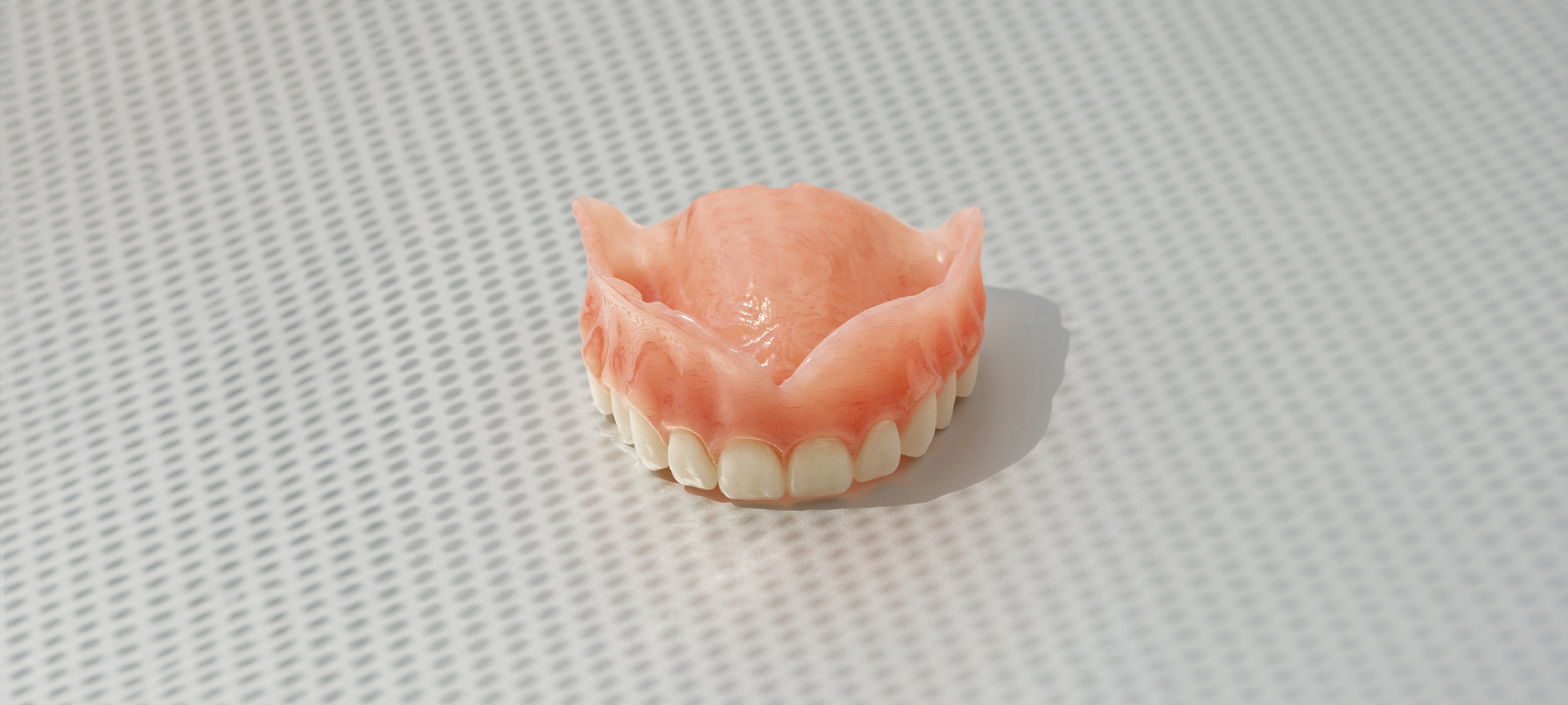
Digital dentures are complete dentures designed in computer-aided software and milled from a solid block of high-quality resin, instead of packed and flasked by hand. At Lafond Desjardins, our milled denture workflow in Laval turns a single impression into a finished prosthesis in fewer visits, keeping a permanent digital record of every case you send us.
With traditional methods, a conventional denture is waxed, packed and processed by hand, and every transfer step introduces error. Digital dentures are created from a digital file instead: the cast or intraoral scan is digitised, the teeth are arranged digitally, and the denture base is milled from one disc. Because one digital model drives design and production, the accuracy of digital dentistry beats traditional dentures on tolerance. Digital dentures offer well-fitting dentures that reach the chair needing fewer adjustments. The full range sits on our digital dental products page.
Our laboratory runs on ten controlled steps. You stay involved at the clinical checkpoints, our dental technicians handle the rest.
The gap between digital and conventional dentures shows in your operatory, not only in our laboratory. Because the design is validated before production, the remakes and chairside grinding that follow a conventional denture largely disappear, cutting both time and cost.
A digital workflow is measurably shorter. In a 2025 case report published in Case Reports in Dentistry, a CAD/CAM complete denture protocol cut treatment to three visits, against five for the conventional method. A milled denture base seats predictably, sending your appointment toward occlusion checks rather than pressure spots.
Every case is archived as a digital file. If a denture is lost or damaged, we remake it from the stored digital record without a new impression, and you follow the job through the Trak app. That traceability also streamlines partial denture work and cases built on dental implants.
Our participative design and production process allows you to easily collaborate in key stages. This method ensures a highly precise dental prosthesis that meets the needs of the patient.

Both physical and digital intraoral impressions can be used to create a digital dental prosthesis. All types of files generated by an intraoral scanner are accepted.
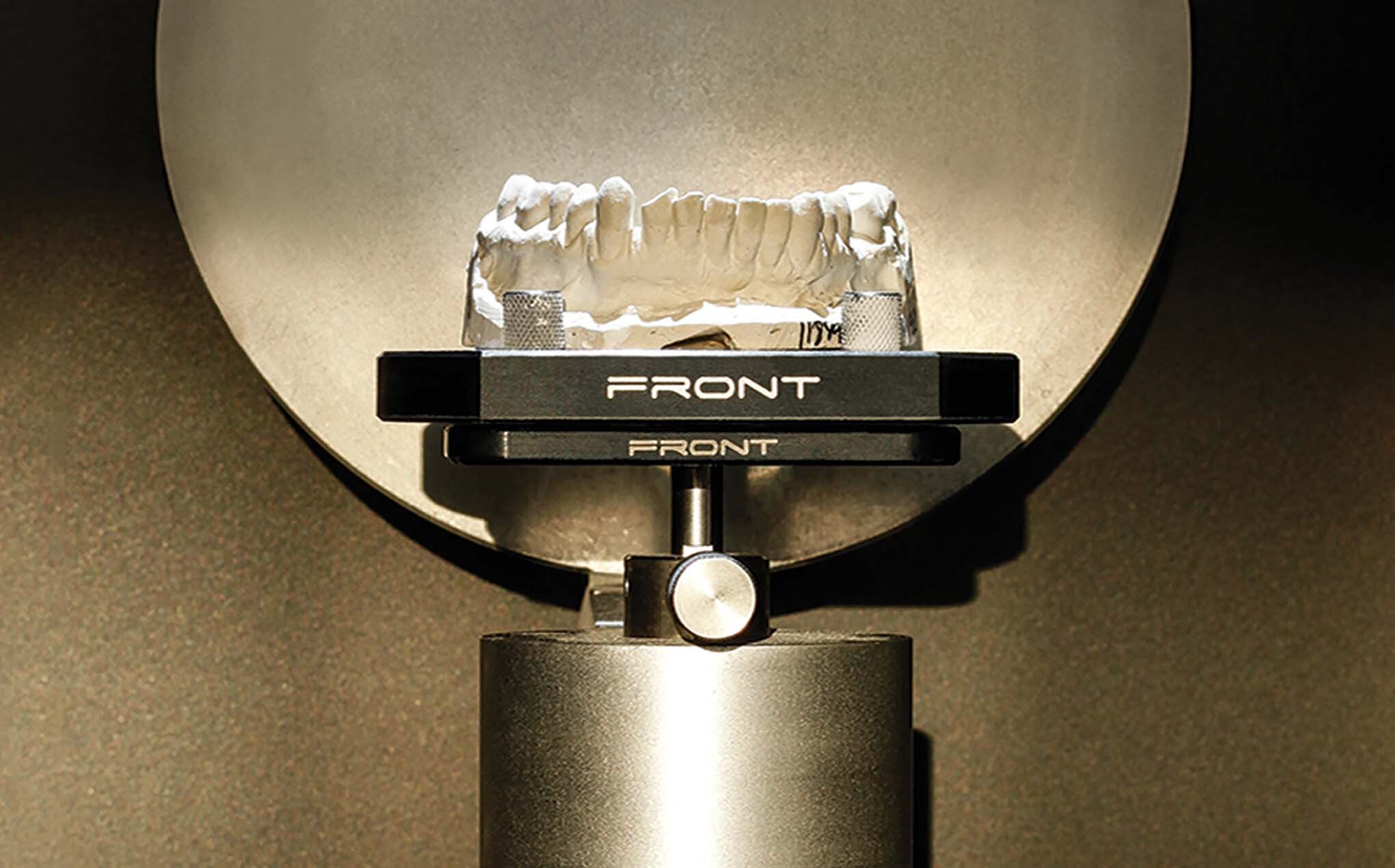
With a Zirkonzahn scanner equipped with three high-definition cameras, the physical or digital impression is accurately imported into our computer-aided design software, creating a detailed representation of the patient’s mouth.
The intermaxillary tooth-size ratio, the Spee curve and the midline, canine and lip position are calculated using wax rims and baseplates.
A virtual Ivoclar Stratos articulator then defines the spatial position of the mandible in relation to the maxilla. These elements are scanned and the data is imported into 3D design software.

The removable dental prosthesis is modelled using powerful computer-aided design software. The teeth are selected based on the occlusal concept and desired morphology from a library of teeth.
This technology ensures a meticulous design:
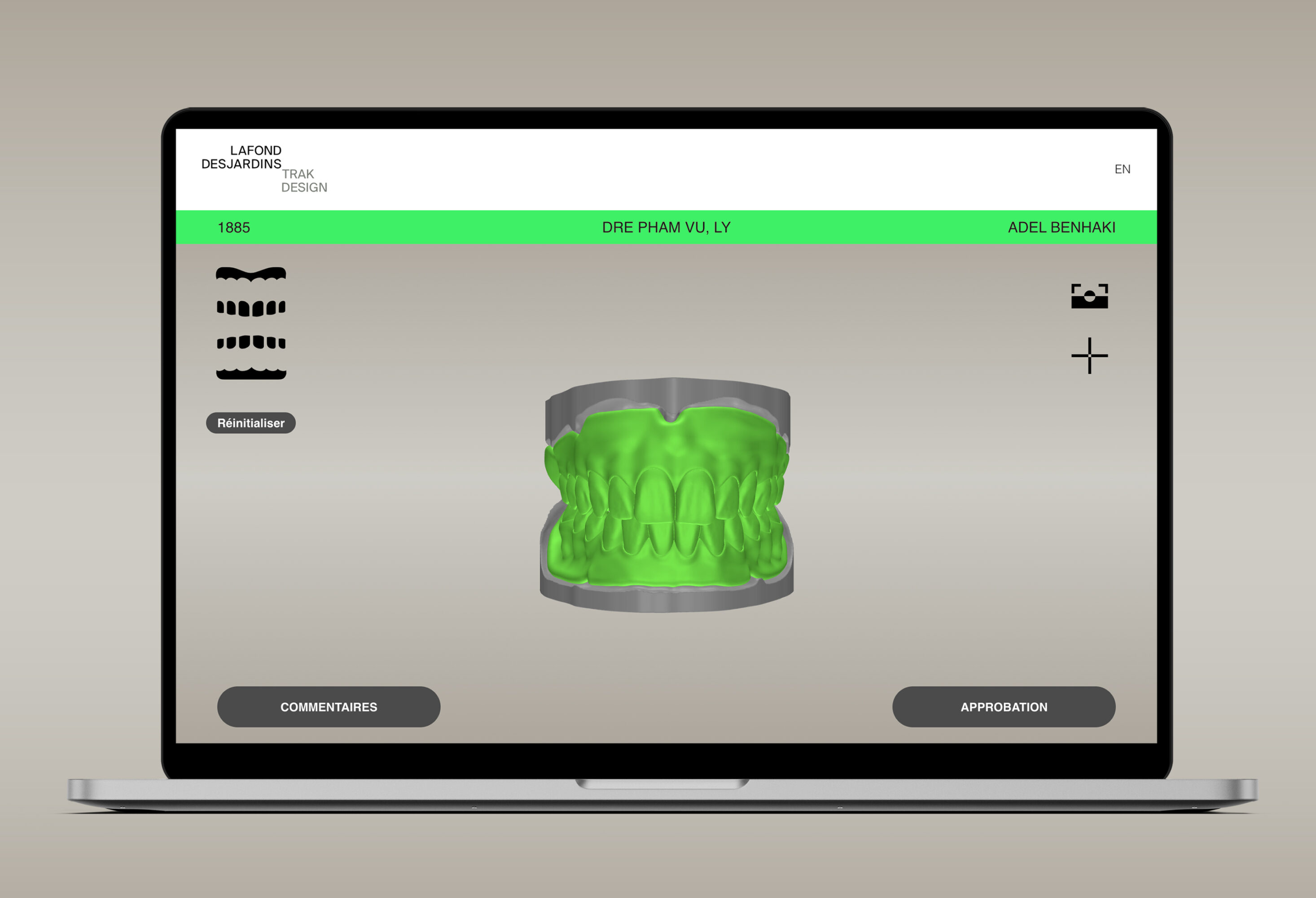
Visualize the three-dimensional modelling of the product before the prototype is created. The display of diagnostic, preoperative or temporary models, as well as the transparency filter, allows for a thorough comparison of the elements.

This important step significantly reduces manufacturing costs.
Printed with biocompatible resins, the prototype allows for validating the bite, occlusal functionality, tooth position and suction, allowing our technicians to make corrections before final production.
Adjustments are made through material addition and subtraction.

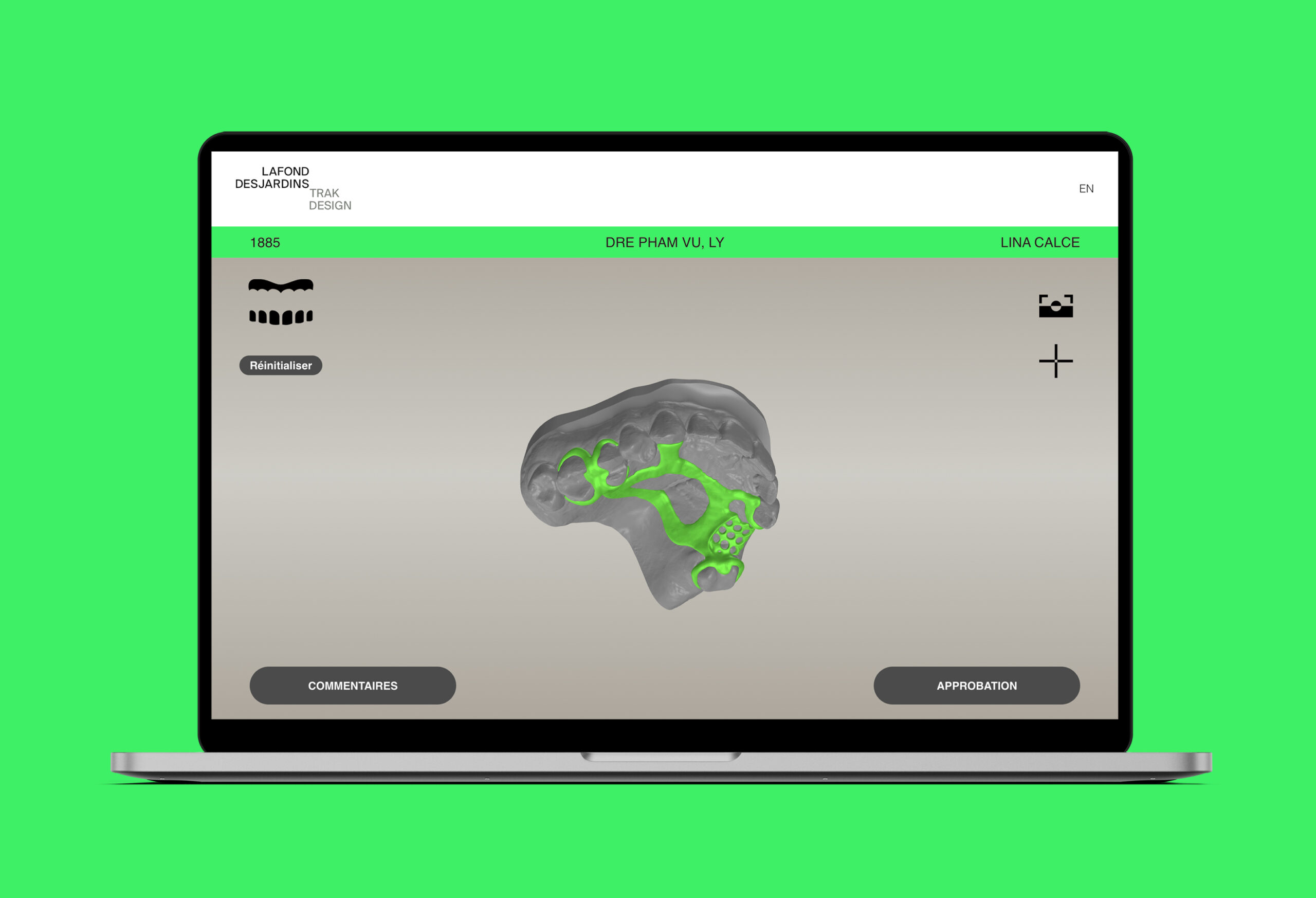
Our technicians use the corrected prototype to revise the case. A second 3D modelling is then accessible on the TrakDesign platform.
Comments regarding tooth positioning modifications can be added and are received instantly. Once the model is approved, the final printing is initiated.

The prosthetic arches are milled from Ivotion Base discs by Ivoclar, a high-quality resin that offers numerous advantages:
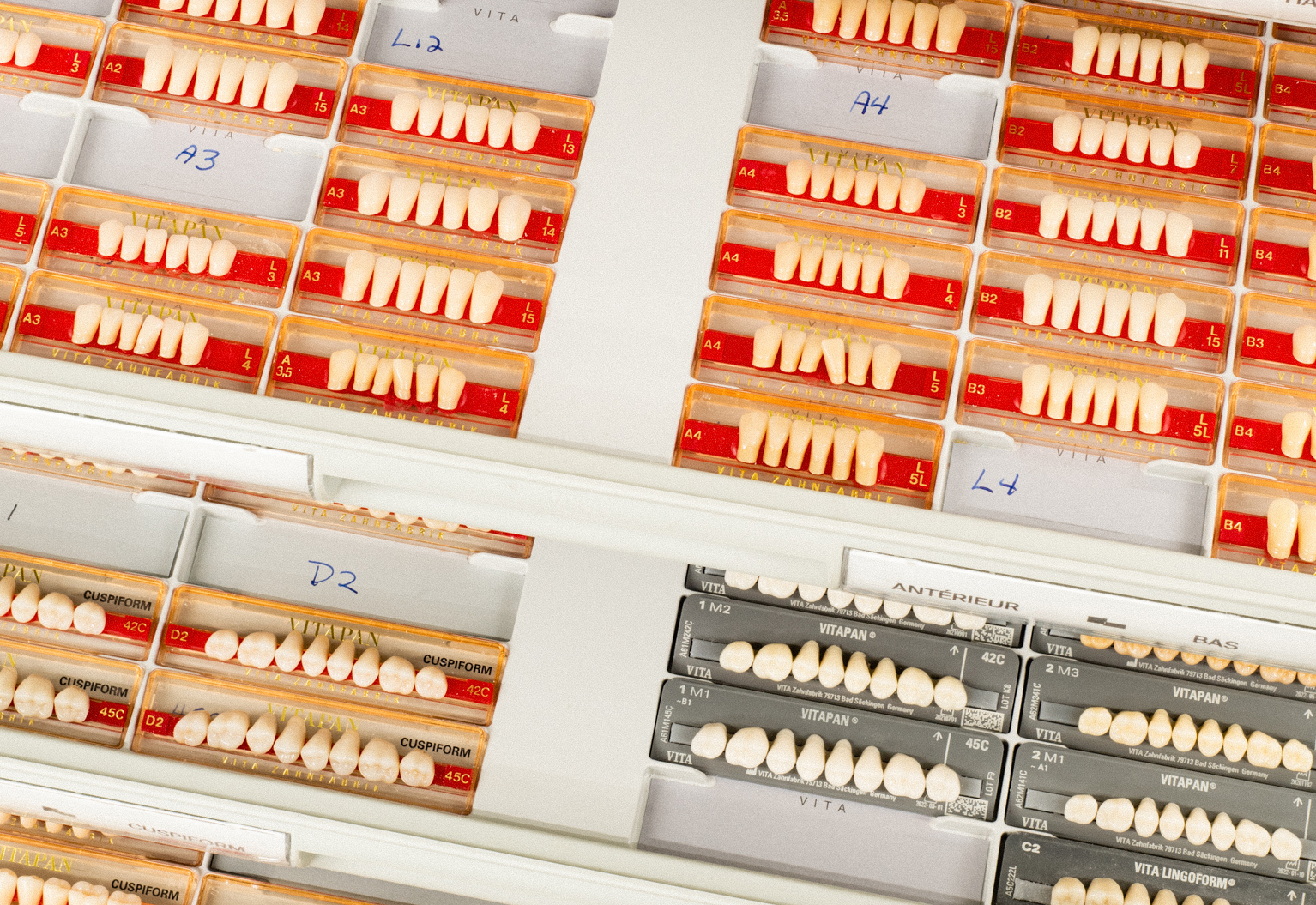
Cold bonding is preferred to maintain adaptation parameters. VITA VIONIC VIGO teeth, with their vibrant shapes and exceptional proportions, are bonded into the prosthetic bases, fitting perfectly within microns, thanks to the key-lock principle.
The low-viscosity, self-polymerizing bonding system is the preferred technique as it allows for:
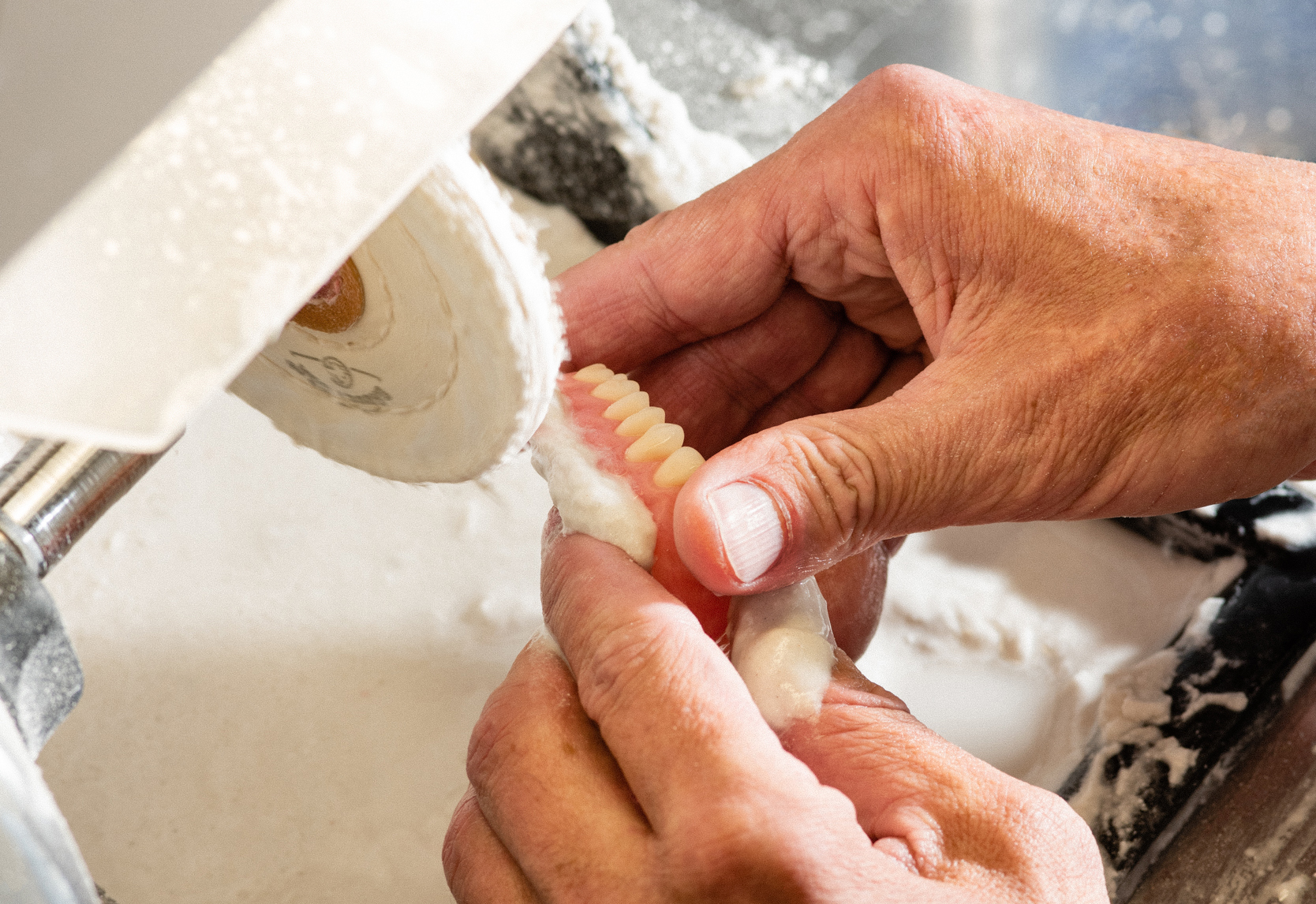
The removable dental prosthesis is hand-polished until a natural-looking, glossy finish is obtained. The complete process and parameter control enable the polishing to be performed without the use of pumice stone. This technique ensures a scratch-free product with an impressive shine.