


Designed for dental clinics seeking predictable dental veneers that blend seamlessly with natural teeth within aesthetic treatment plans.
Our collaborative design and production process allows you to easily participate in key stages. This method ensures a highly precise dental prosthesis that meets the needs of the patient’s clinical and aesthetic requirements.
As a dental laboratory focused on digital precision, Lafond Desjardins supports dentists and clinics with a veneer process designed to improve communication, streamline approval and deliver custom veneers adapted to each treatment plan.

Both physical and digital intraoral impressions can be used to create a digital dental prosthesis. All types of files generated by an intraoral scanner are accepted.
This flexibility allows the dentist to submit digital scans directly from the clinic or send a physical impression, depending on the clinical workflow and the requirements of the veneer case.
For anterior dental veneers, the quality of the impression or scan is essential to support accurate margins, proper tooth structure analysis, and a predictable placement strategy.

With a 3D Shape scanner equipped with three high-definition cameras, the physical or digital impression is accurately imported into our computer-aided design software, creating a detailed representation of the patient’s mouth.
This digital step helps the lab reproduce the natural tooth structure, gum contours and surrounding teeth with a high level of detail before beginning the custom veneer design.
Accurate scanning also supports better communication between the dental laboratory and the clinic when adjustments, shade matching or specific cosmetic concerns need to be considered.

The veneer or veneers are modelled using the patient’s dental model, which is perfectly reproduced using our powerful 3D software : Shera models technology. During this stage, the dental technician works with the digital model to design a restoration that respects the planned shape, alignment, shade and aesthetic objectives of the case
This 3D modelling process helps personalize the veneer design according to the dentist’s indications, whether the case involves shade correction, minor structural concerns, alignment considerations or a broader aesthetic treatment plan.
The digital workflow also makes it easier to evaluate the relationship between the veneer, the opposing arch and adjacent natural teeth before fabrication begins.

Using the TrakDesign platform, you can comment on and approve the 3D model.
This collaborative approval step allows the dentist to review the proposed veneer design, request an adjustment and validate the model before the dental lab moves to fabrication.
By centralizing comments in TrakDesign, the clinic and laboratory can maintain a clear record of the design process, helping make the final restoration more predictable.
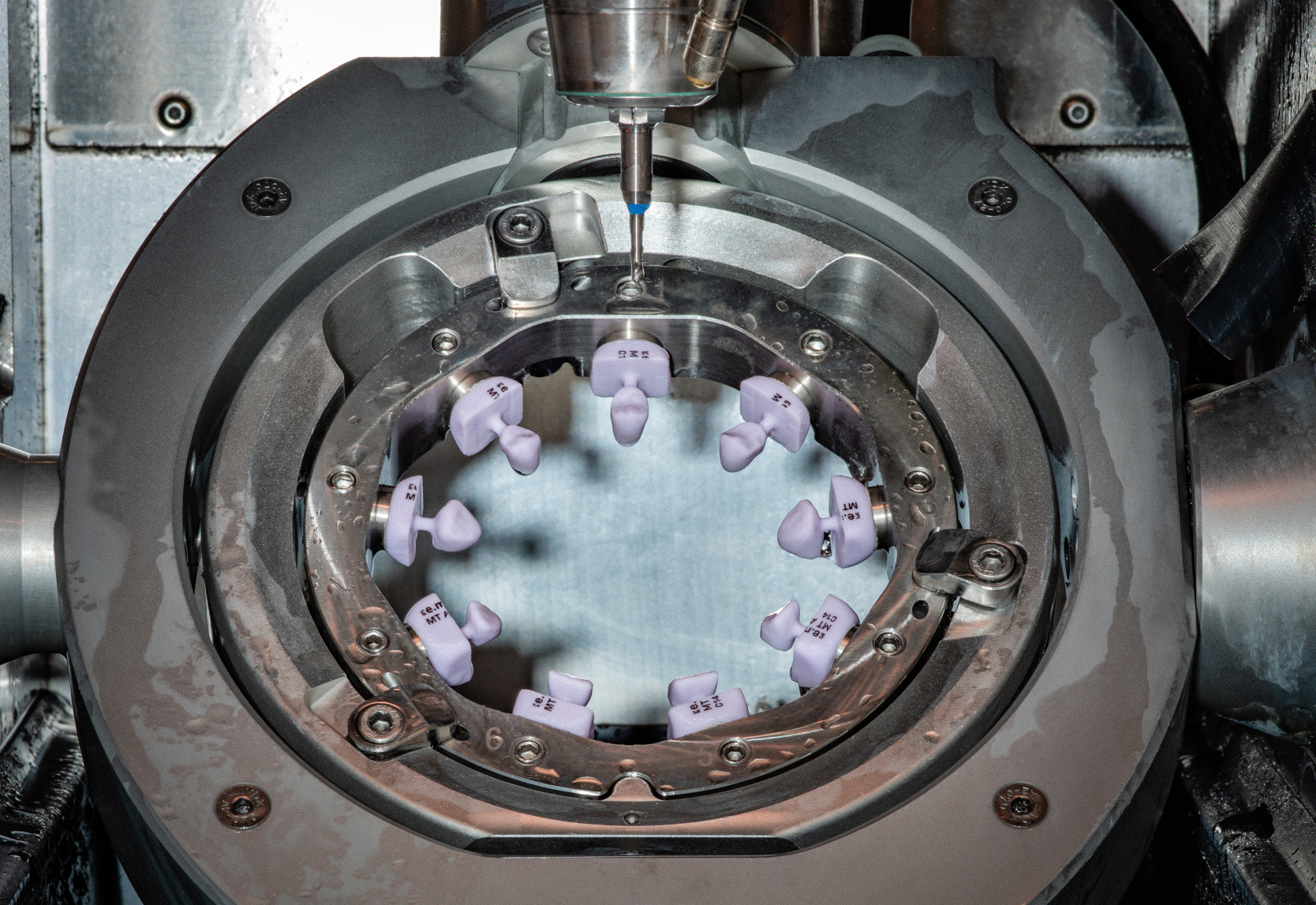
A computer-aided milling machine smoothly shapes the veneer with precision. This passive production method ensures an aesthetic and biocompatible prosthesis with excellent mechanical strength.
Computer-aided fabrication supports consistent results for custom dental restorations, including veneers designed to integrate naturally with the patient’s existing tooth structure.
The process is suited to aesthetic cases where precision, durability and natural integration are essential to the treatment plan.
This digital workflow can also support related fixed dental prosthesis cases, including crown and bridge, depending on the treatment plan.

This type of ceramic allows for functional and aesthetic teeth that withstand bending and thermal shocks.
After the application of ceramic in successive layers, the base colour and shades are meticulously applied by hand, one by one, to reproduce the natural appearance of teeth.
This meticulous layering process helps create depth, translucency and brightness similar to natural teeth, supporting a porcelain veneer aesthetic while maintaining the precision of a digital dental lab workflow.
