

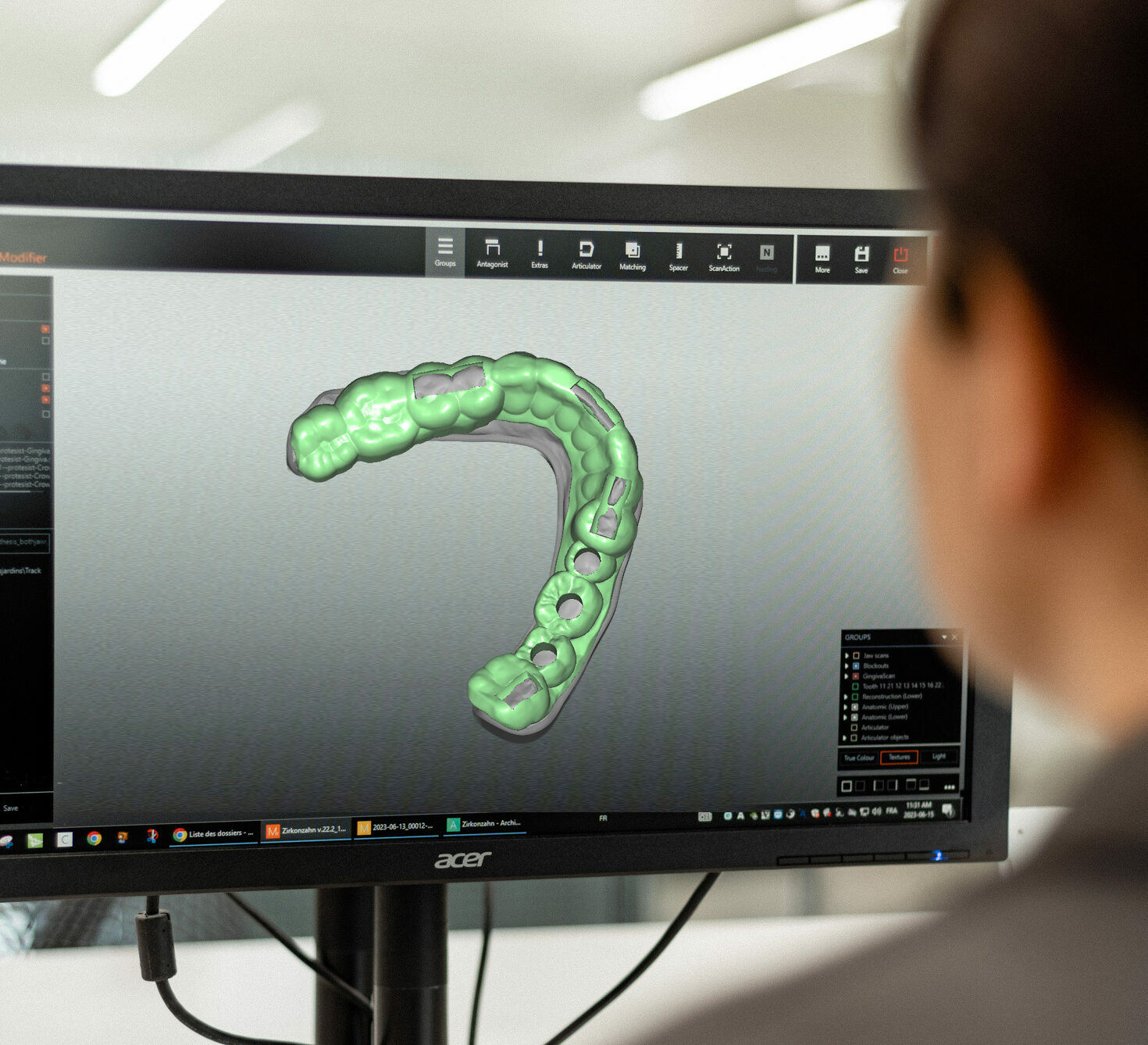
Our participative design and production process allows you to easily collaborate in key stages. This method ensures a highly precise dental prosthesis that meets the needs of the patient.
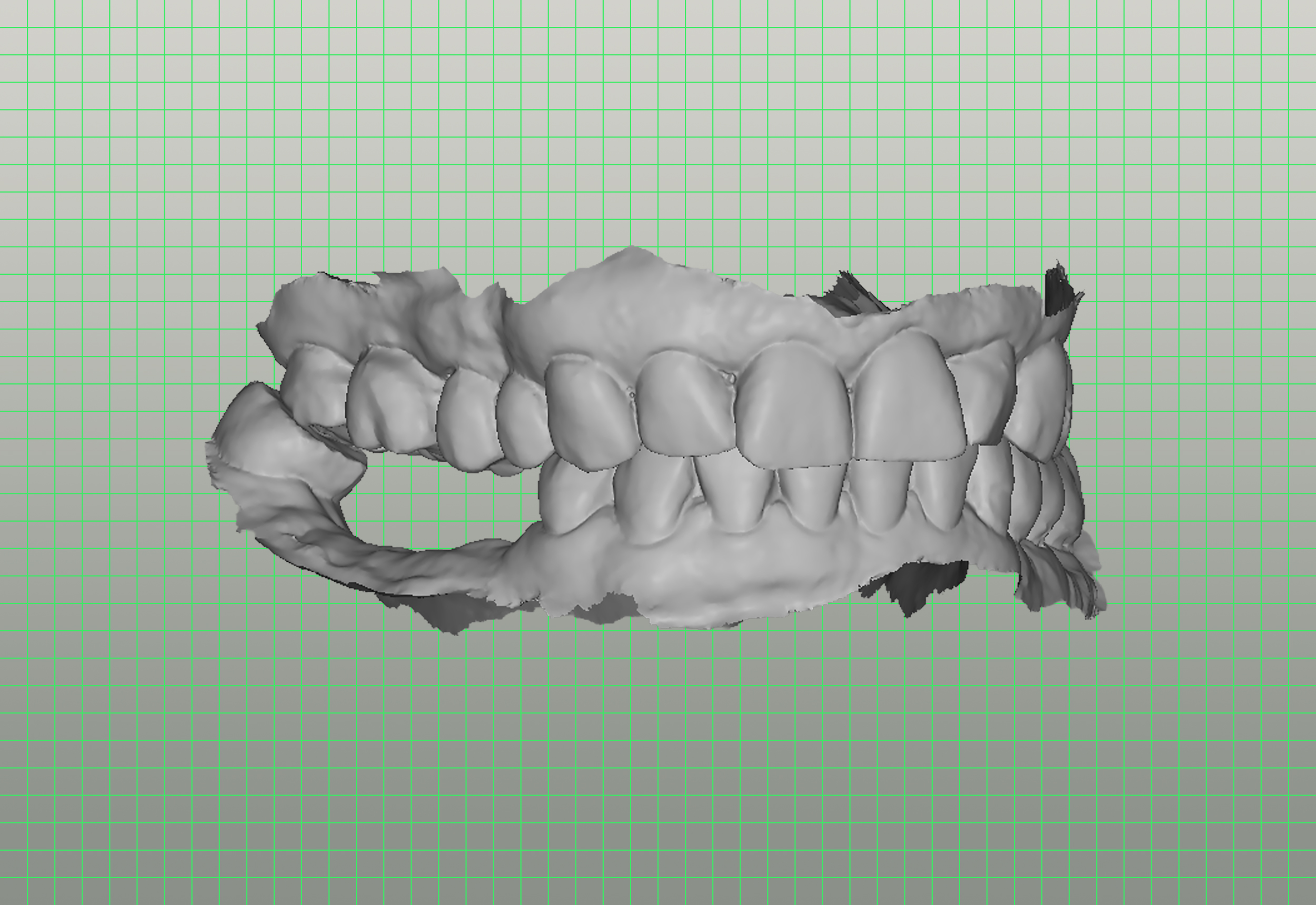
Both physical and digital intraoral impressions can be used to create a digital dental prosthesis. All types of files generated by an intraoral scanner are accepted.
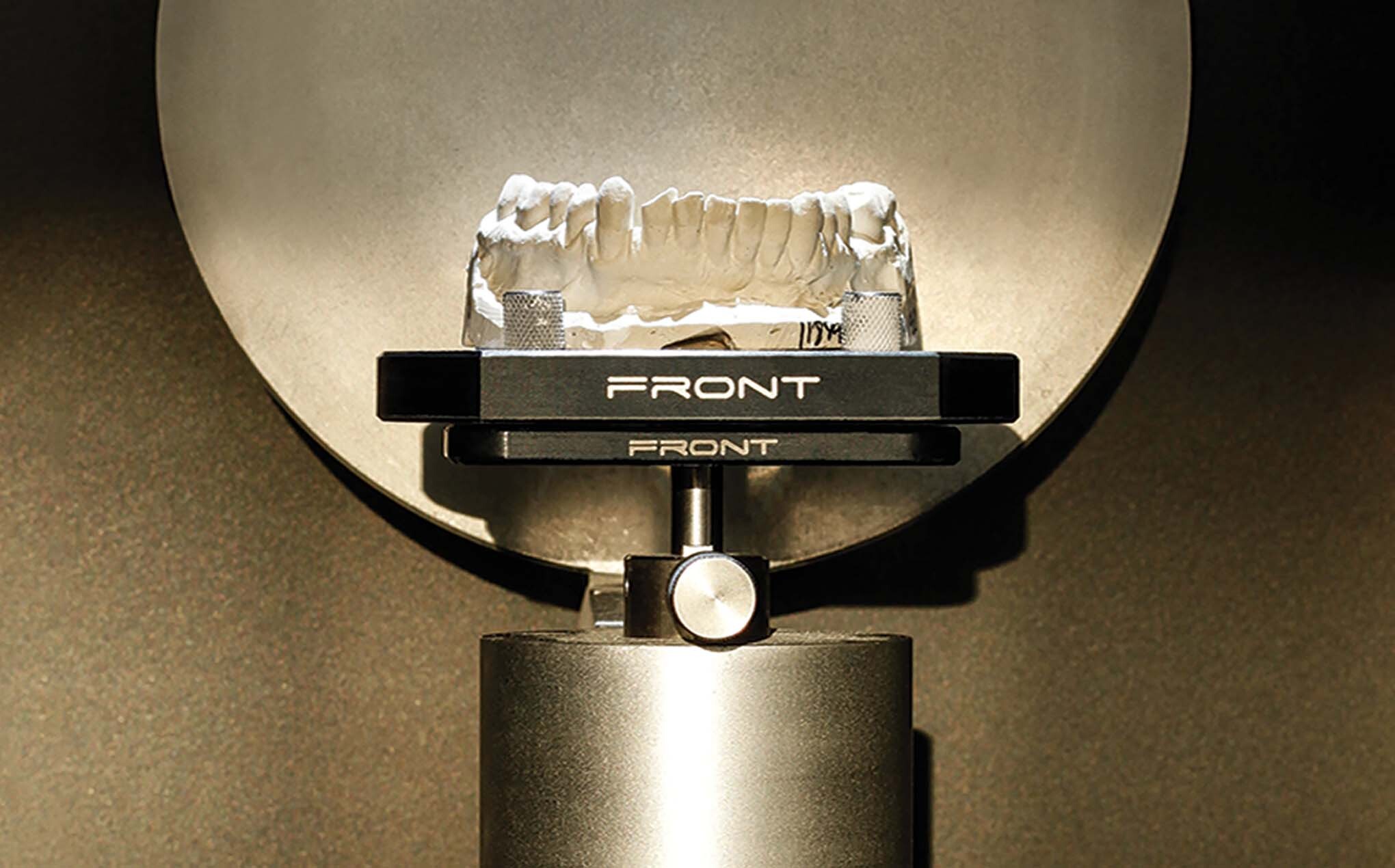
With a Zirkonzahn scanner equipped with three high-definition cameras, the physical or digital impression is accurately imported into our computer-aided design software, creating a detailed representation of the patient’s mouth.
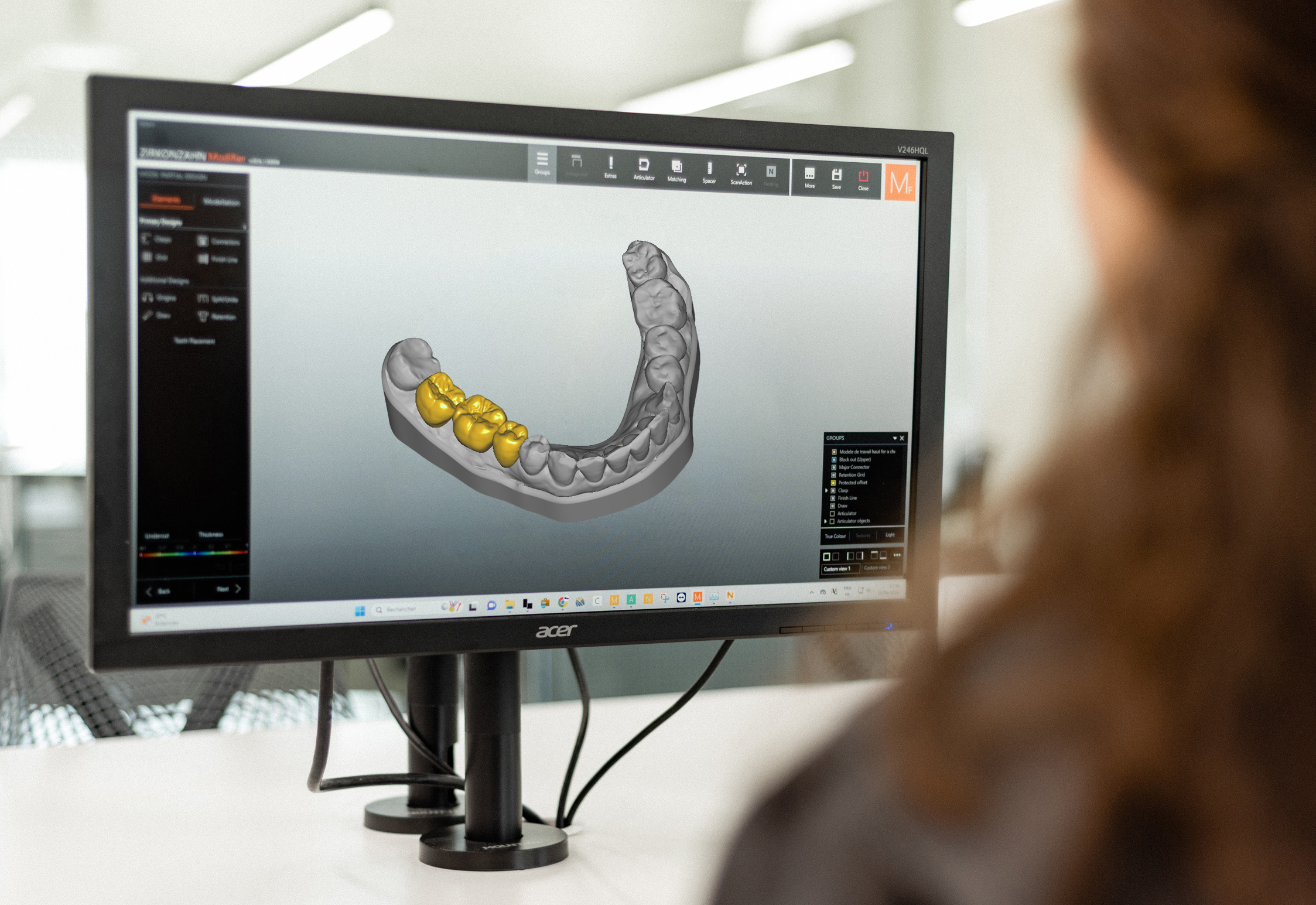
Based on preoperative files or an existing prosthesis, the missing teeth are virtually reconstructed in our design software, integrating radiographic data as well as bone and implant positioning.
The guide is designed based on the diagnostic situation, integrating the ideal direction defined by the future prosthesis and the implant positions. Occlusal accesses are precisely generated, ensuring smooth and accurate planning
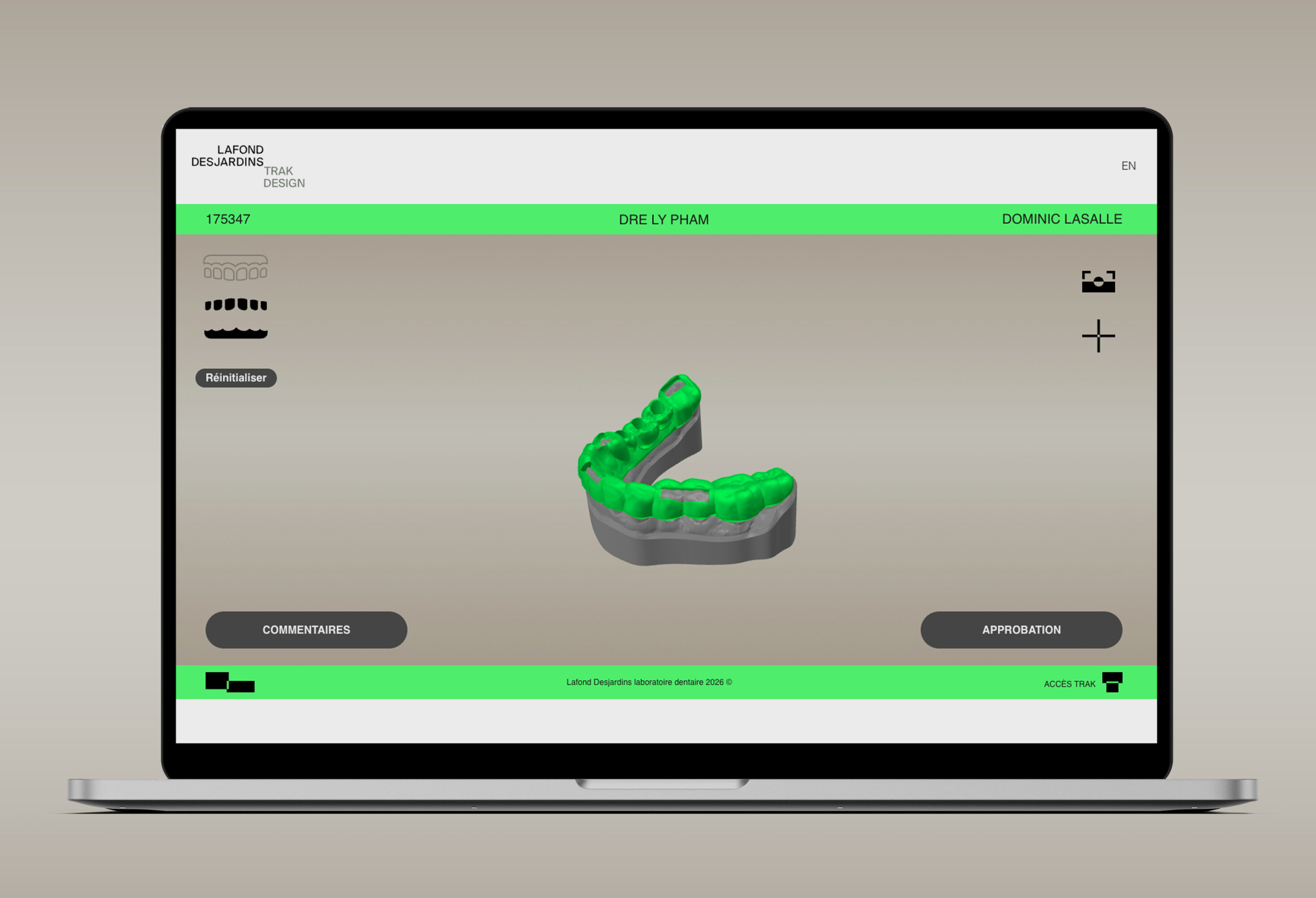
The 3D model can be commented on and approved on the TrakDesign platform.
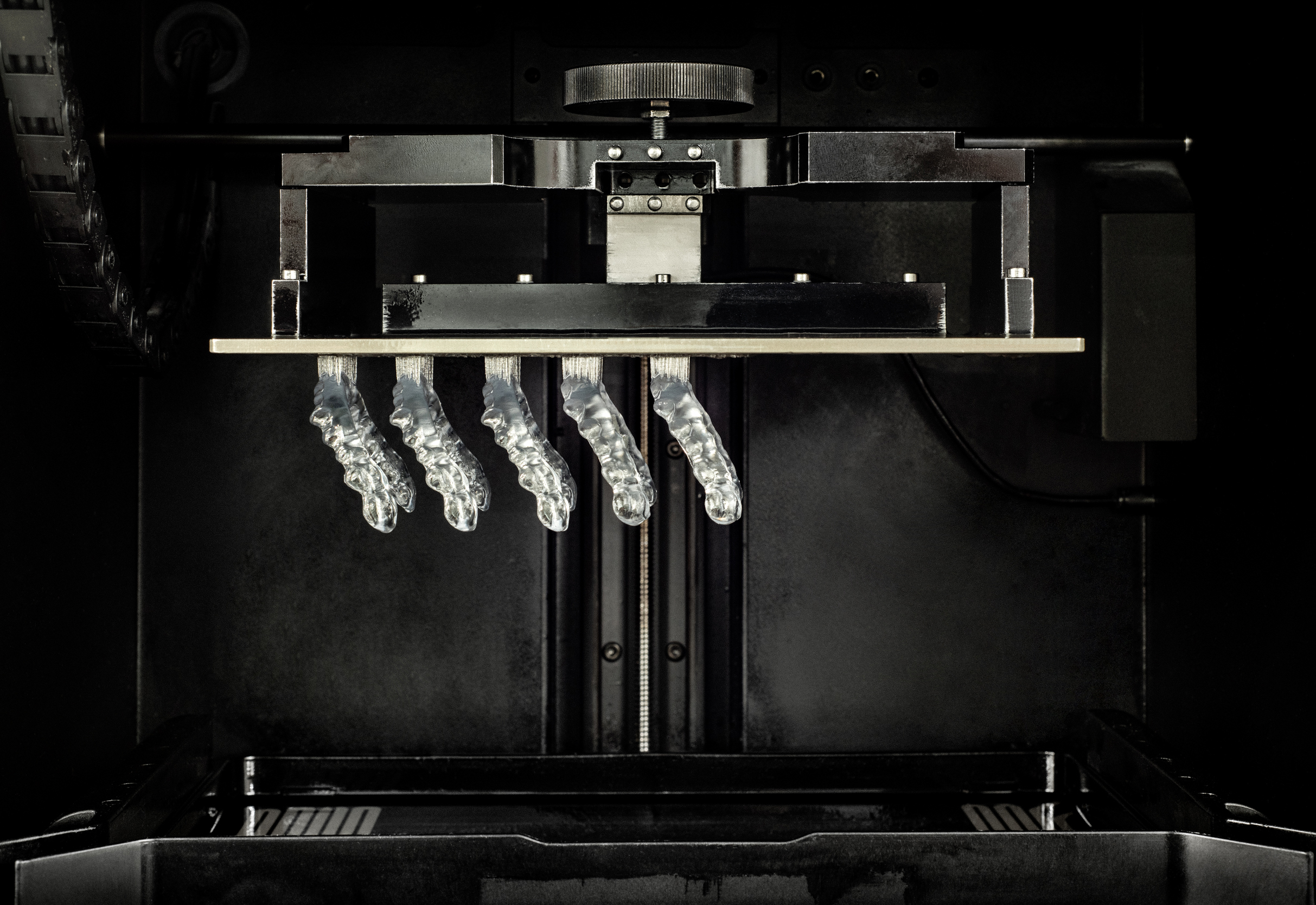
Printed with biocompatible materials and digital resins, the plate complies with regulations and international standards for medical devices.
The addition of barium sulphate in the center of the teeth also allows for the simultaneous design of a complete or customized radiographic guide, tailored to specific clinical needs.