
Our participatory design and production workflow allows you to be involved in key stages. This process ensures a highly precise zirconia prosthesis that meets the needs of the patient.
For dental clinics, dentists and professionals in dentistry, this workflow supports better communication, efficient validation and a prosthetic result adapted to each clinical case. Depending on the treatment plan, the dentist may use this workflow to validate a full-arch restoration, an implant-supported dental bridge, or another fixed dental solution.
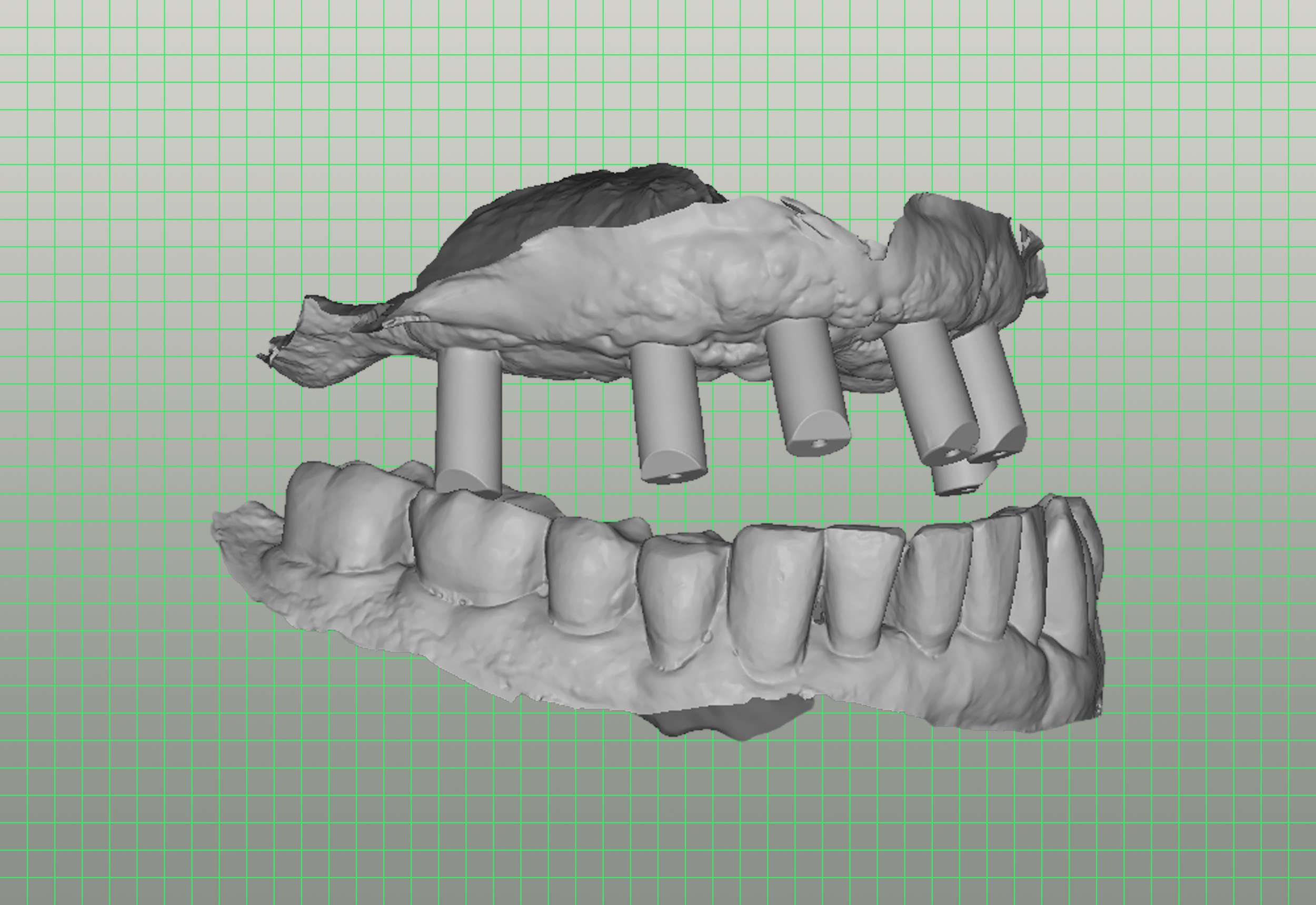
Physical or digital intraoral impressions can be used to create a digital fixed dental prosthesis. All types of files generated by an intraoral scanner are accepted.
This first step allows the dental lab to begin designing a custom-made dental prosthesis based on the patient’s anatomy, whether the case involves tooth loss, one or more missing teeth, or a full-arch implant-supported restoration.
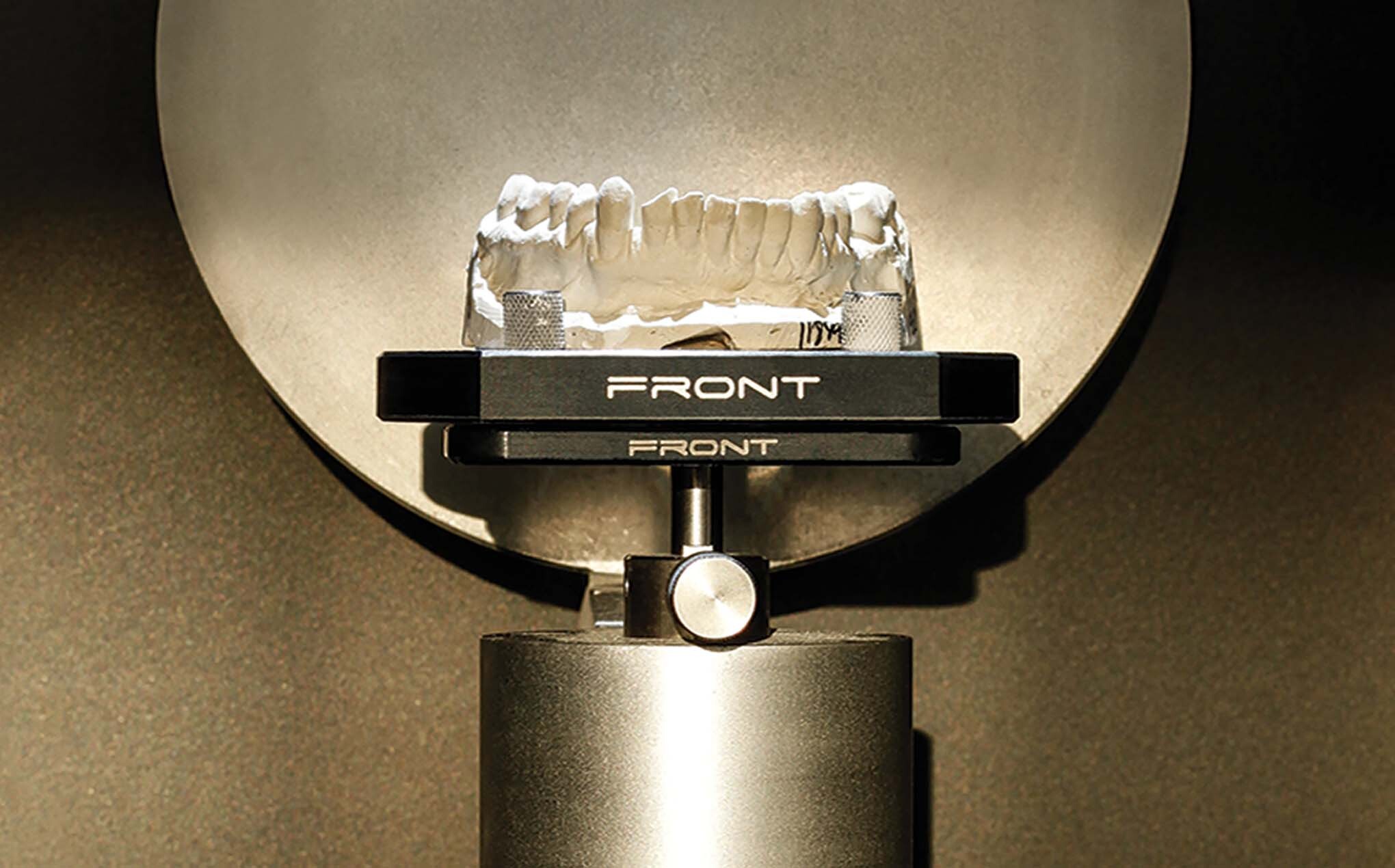
Using a Zirkonzahn scanner equipped with three high-definition cameras, the physical or digital impression is imported into computer-aided design software and the patient’s mouth is accurately recreated.
This digital process helps ensure that the fixed dental prosthesis is designed with a high level of precision, taking into account the gum, jawbone relationship, implant position and overall prosthetic requirements.
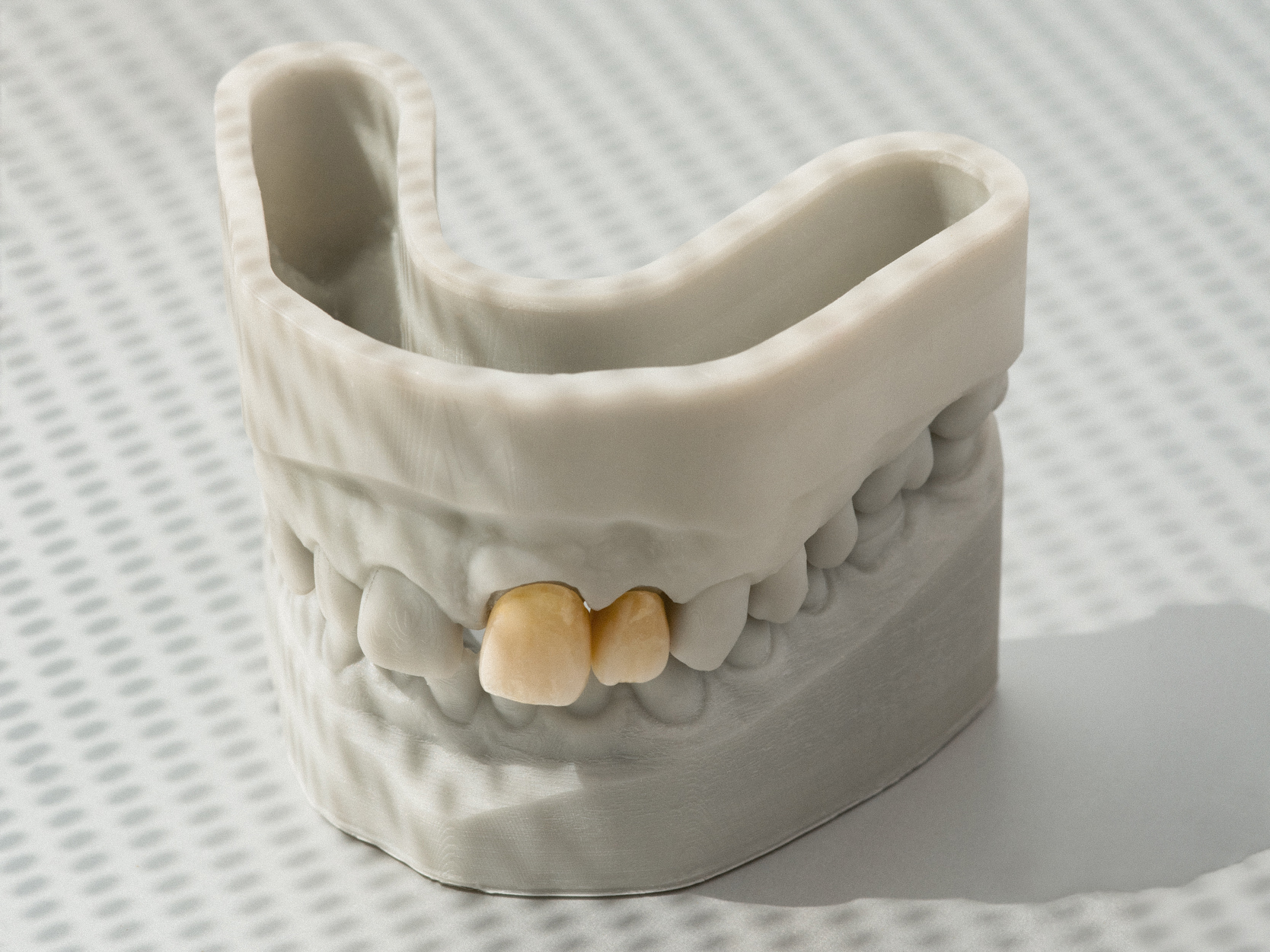
To determine the overall aesthetics of the final product, a temporary arrangement of the teeth on a wax rim is created. The approved set-up is then imported into the 3D design software. This step is particularly useful for full-arch cases, where fixed teeth must restore the patient’s ability to chew while maintaining a natural appearance.
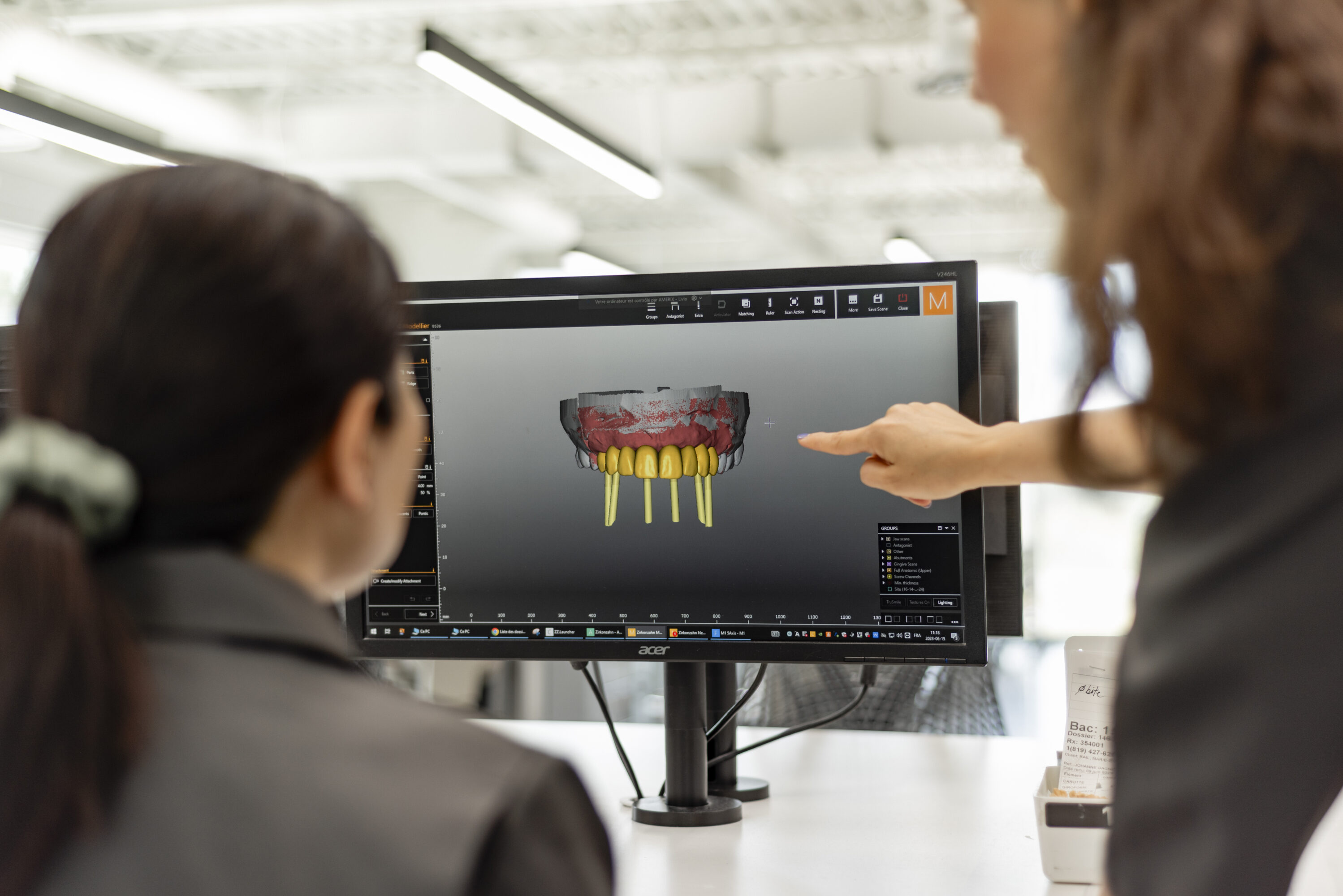
The fixed dental prosthesis is modelled using powerful computer-aided design software. To achieve realistic sculpting and highly realistic morphology, the teeth are selected from a tooth library developed by Zirkonzahn.
This makes it possible to adapt the tooth’s shape, proportions and occlusal design to the dental needs of each case. The same precision can be applied when planning a dental bridge or replacing one or more teeth as part of an implant-supported treatment.
The digitization of the process allows for:
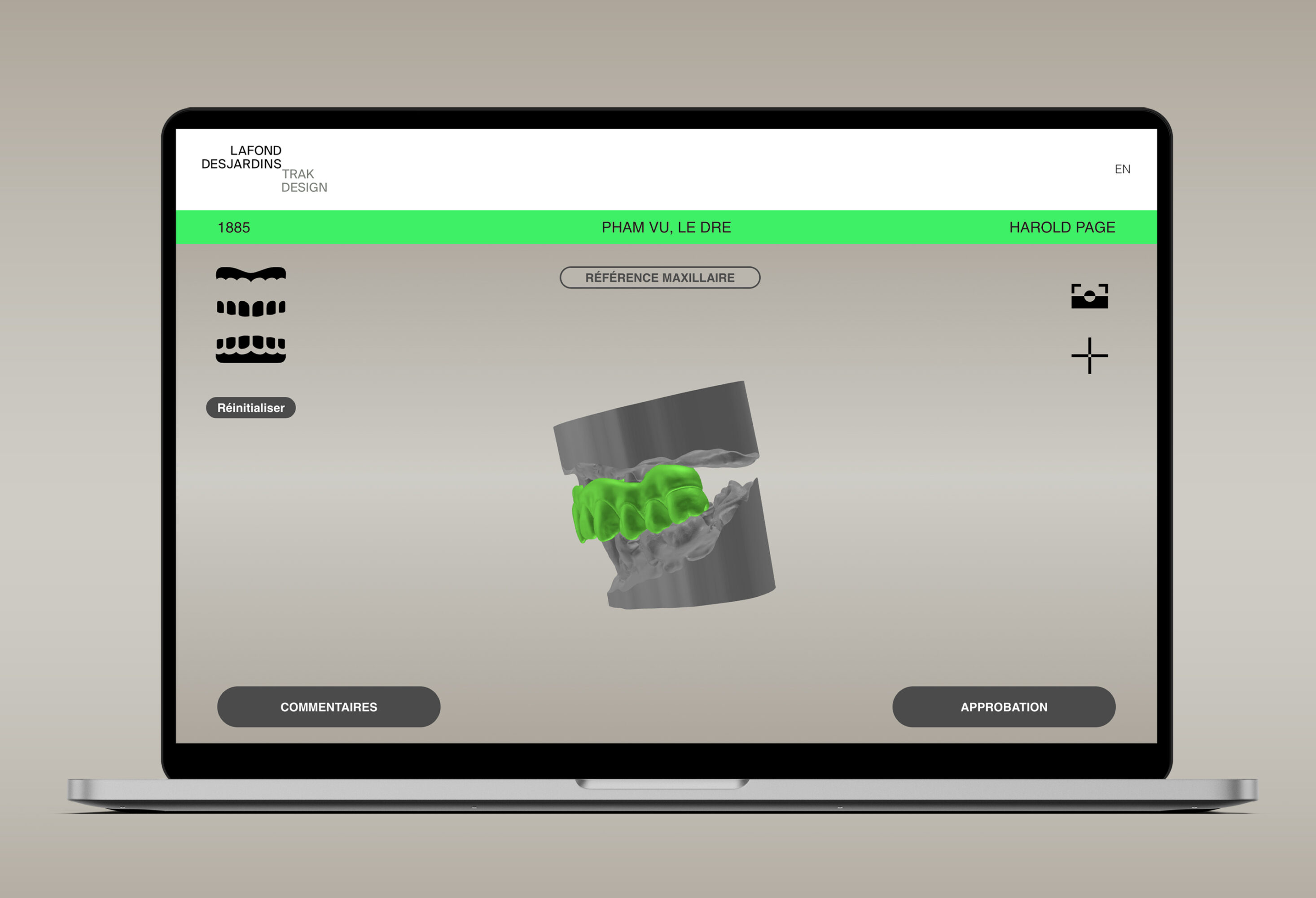
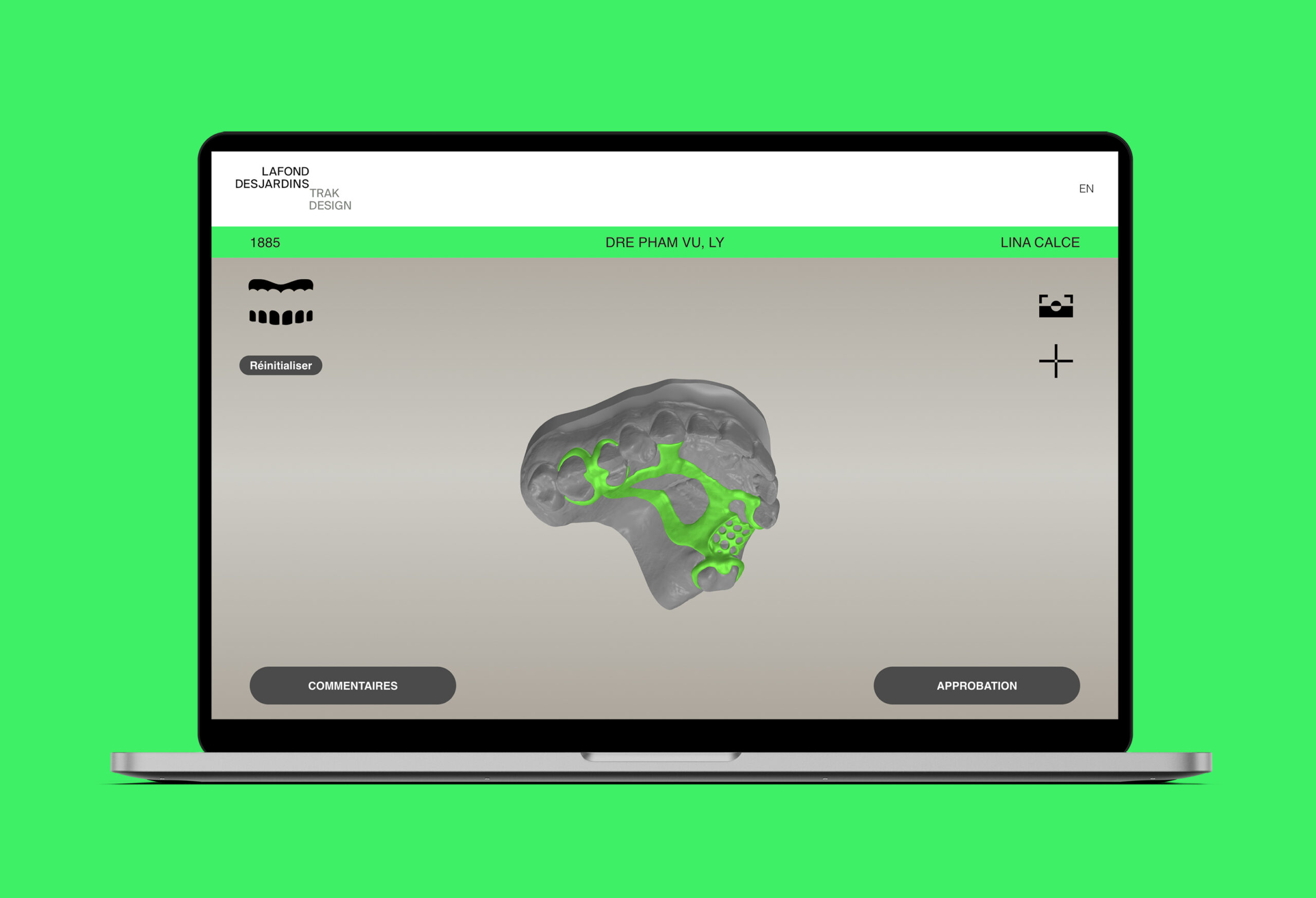
Visualize the three-dimensional modelling of the product before the prototype is created. The display of diagnostic, preoperative or temporary models, as well as the transparency filter, allows for a thorough comparison of the elements. This collaborative step helps the dentist review the fixed dental prosthesis before fabrication, comment on function and aesthetics, and validate the proposed design directly with the dental lab.
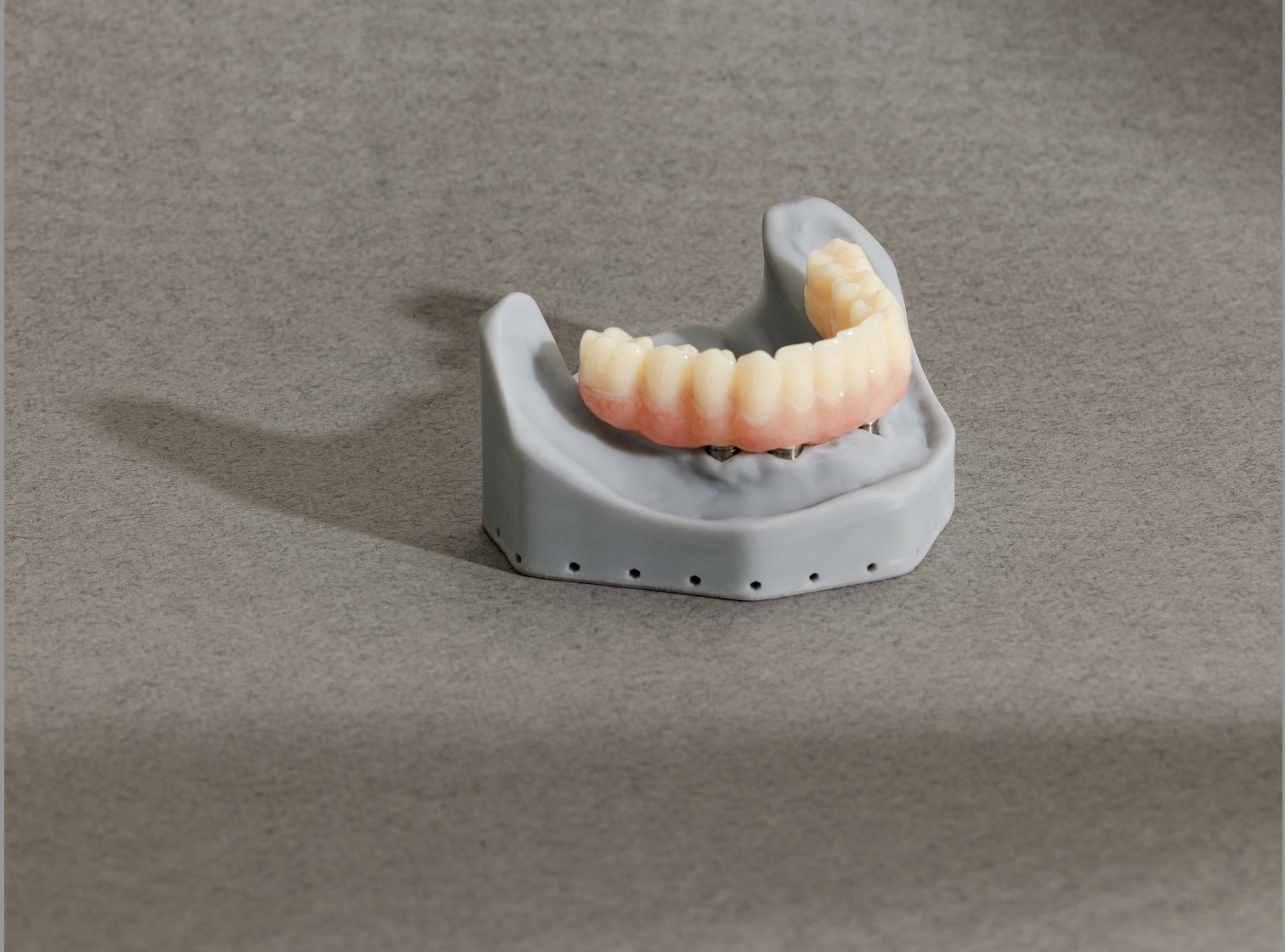
To ensure optimal comfort, the patient wears a prototype for a few weeks. Using the TrakDesign platform, you can add notes regarding functional adjustments and aesthetics.
This phase allows the dental clinic to evaluate comfort, phonetics, occlusion and the ability to chew before the final zirconia restoration is fabricated.
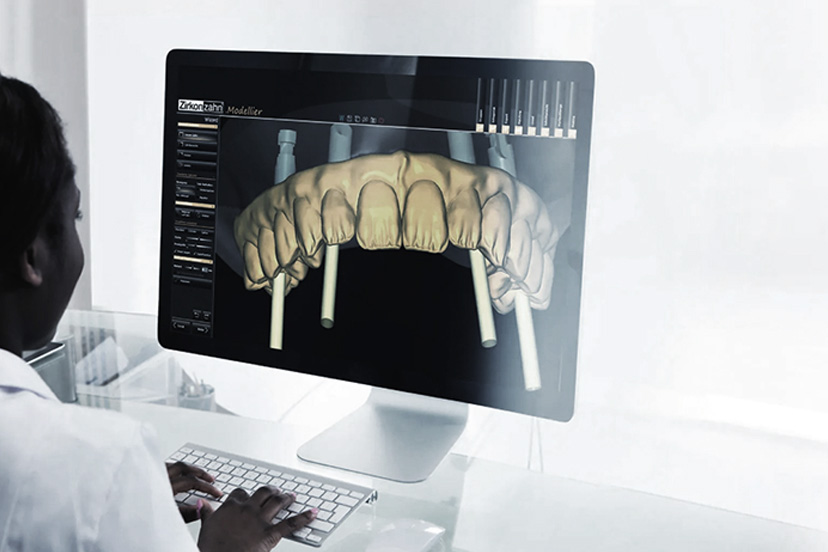
Our technicians use the prototype to carry out virtual corrections. A second 3D dental model is then available on the TrakDesign platform. Once the model is approved, the final machining is initiated. These adjustments help refine the fixed prosthesis and ensure that the final dental restoration reflects the approved prototype as closely as possible.
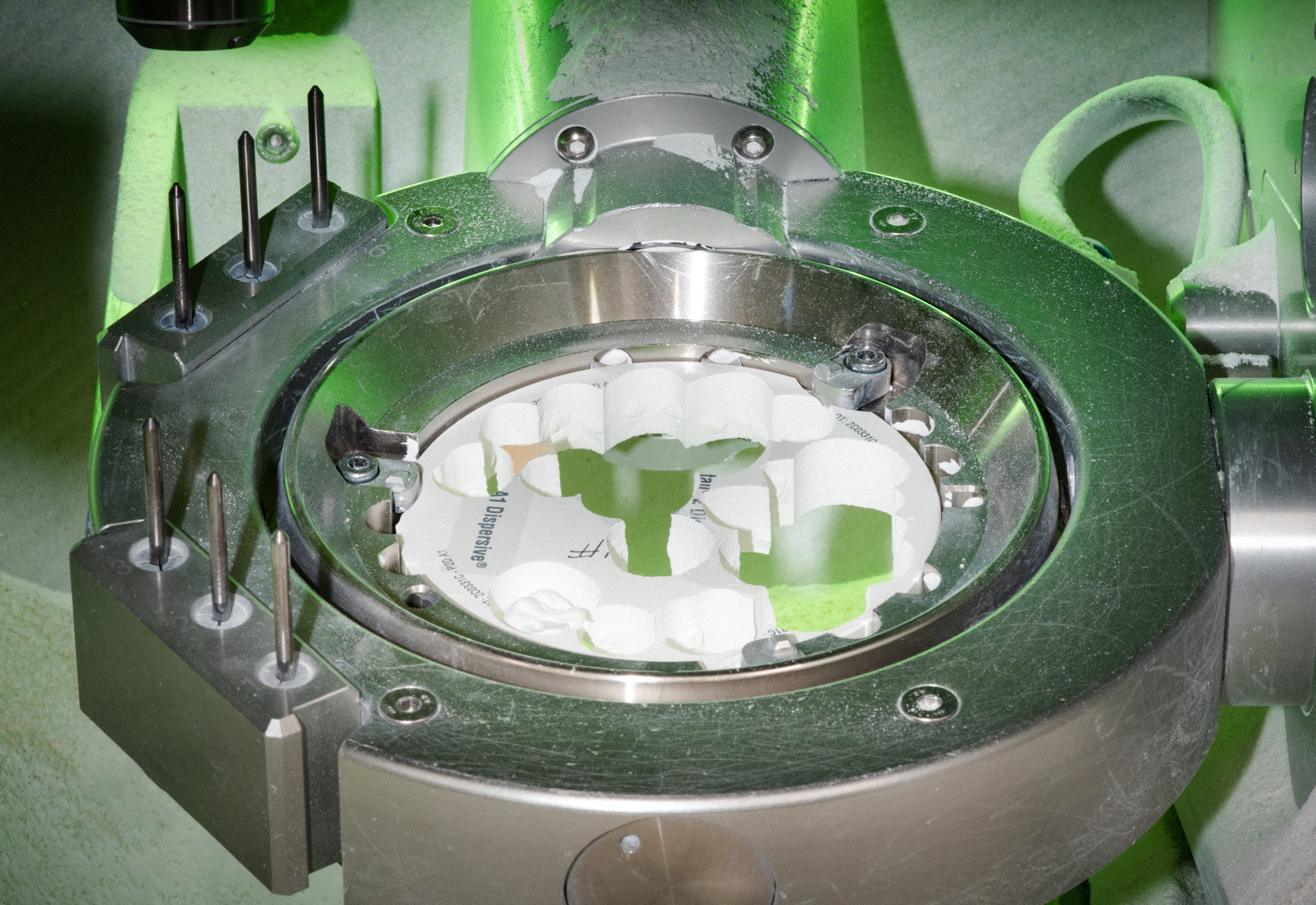
The fixed dental prosthesis is milled from Prettau zirconia blocks using a high-performance five-axis machine.
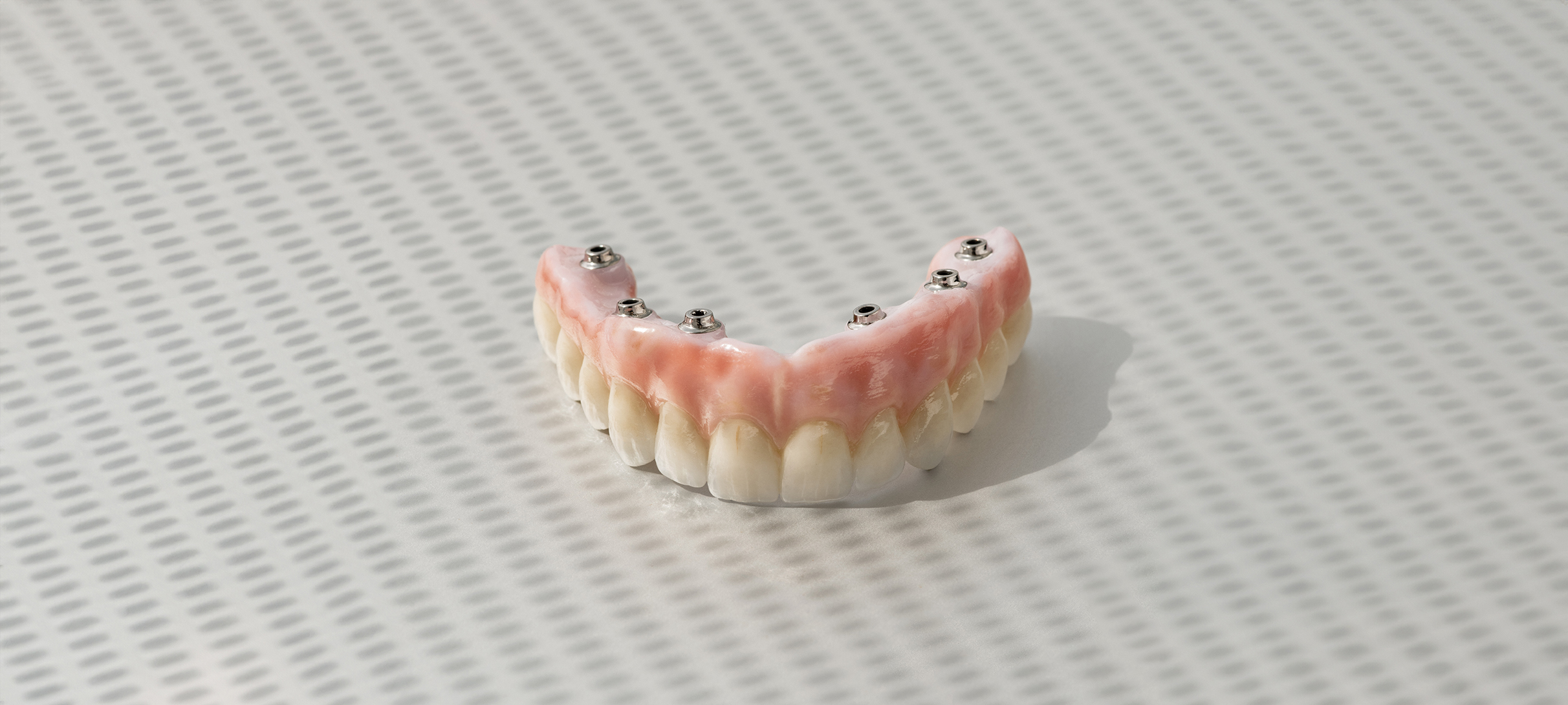
Prettau zirconia is used to produce fixed dental prostheses with strength, durability and a natural appearance, making it a relevant material for implant-supported bridges and full-arch restorations.
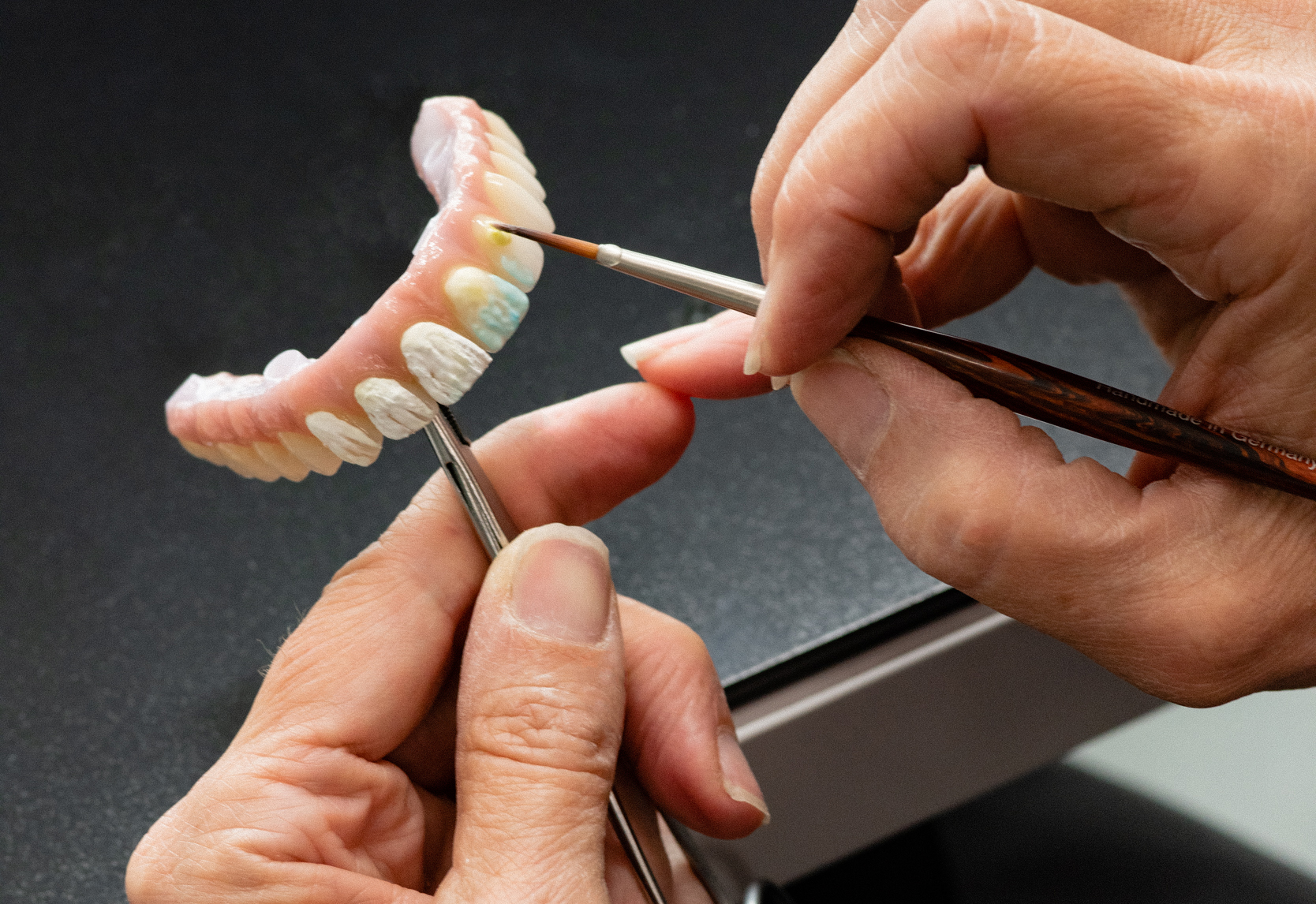
To achieve a natural appearance, internal colourings of various shades are hand-applied to each tooth. The zirconia is then sintered in a specialized furnace for 8 hours. For an impressive aesthetic result, the ceramic is layered on the buccal by an experienced ceramist.
This porcelain layering process enhances depth, translucency and shade variation, helping the fixed dental prosthesis blend naturally with the patient’s oral environment.