

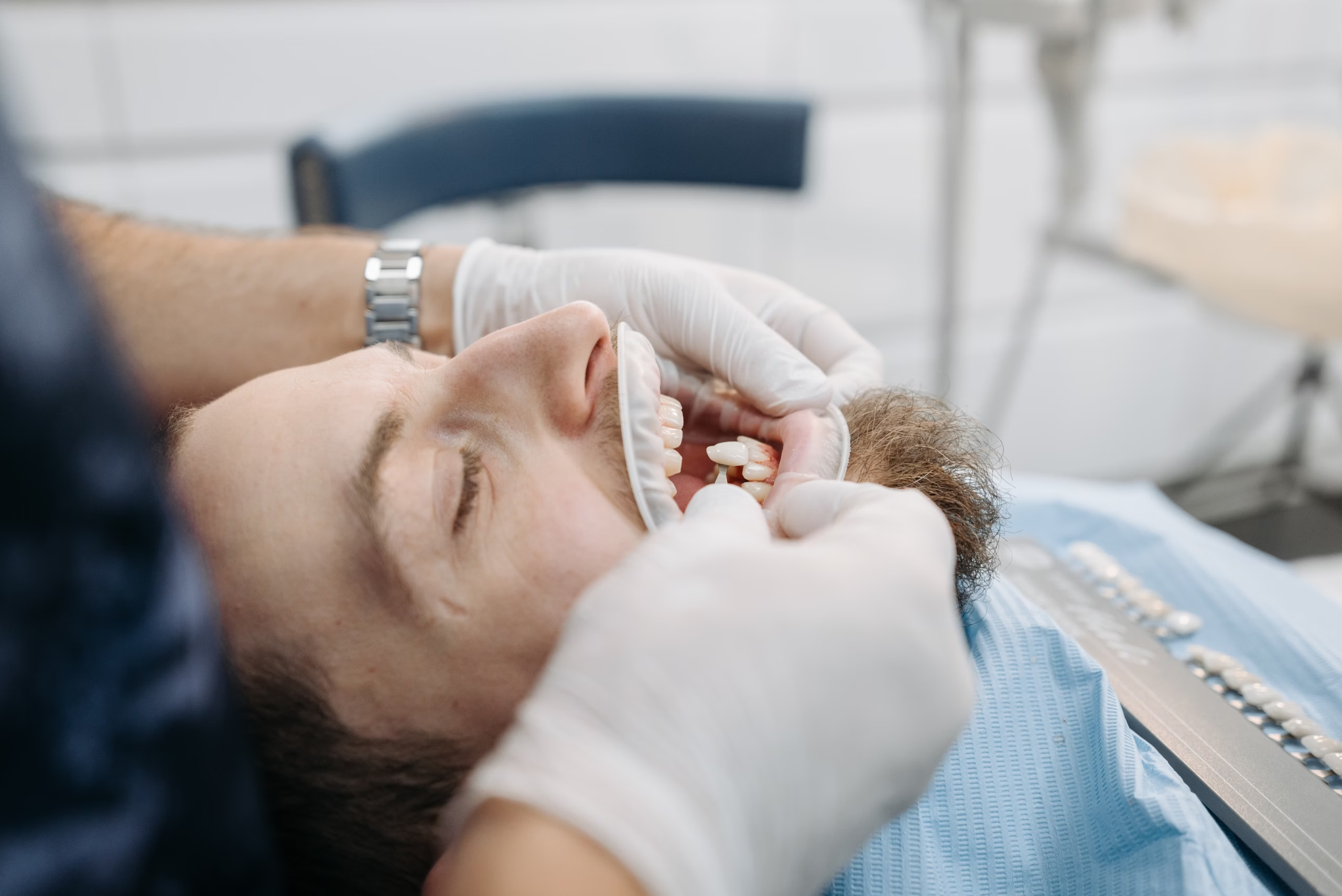
Metal-ceramic and all-ceramic crowns on a vital tooth reach 98.3% five-year survival. At Lafond Desjardins, we recognize that referring clinics and patients want to know more than initial survival rates; they also want to understand how long dental crowns last after a crowned tooth reaches the 10-year mark.
Crown longevity depends on factors such as the type of crown, the quality of the crown margin, and the condition of the underlying tooth.
Most single crowns typically last ten to fifteen years, and a well-prepared dental crown goes beyond. The Swedish register cohort places ten-year survival of indirect crown restorations at 87%. For the dentist, that is a recall benchmark, not a promise attached to one tooth under routine dental care.
A single number misleads at the bench. Vitality of the abutment tooth, the antagonist material, and remake history move the curve further than any average. Case-specific selection from our full range of digital dental products keeps that curve predictable. The clinic gains schedulable recalls and fewer remakes between regular dental visits.
The type of crown is the largest lever on survival. Pooled survival of single crowns runs from 92.9% to 98.7% up to ten years, according to a systematic review in the Journal of Dentistry (2026). Matching the dental crown to the load on the tooth, through our digital crown and bridge workflow, holds the case.
| Type of crown | Documented survival | Source |
| Monolithic zirconia crowns | 86.0% at ten years | J Prosthet Dent, 2025 |
| Lithium disilicate ceramic crowns | 98.5% at five years | Cureus, 2023 |
| Layered zirconia crowns | 71.0% at ten years | J Prosthet Dent, 2025 |
Monolithic zirconia on a posterior tooth reaches 86.0% ten-year survival, against 71.0% for layered zirconia in the same cohort. Those values come from a 2025 retrospective cohort in the Journal of Prosthetic Dentistry.
The mechanism is structural: without a veneering layer, no chipping plane exists. Monolithic zirconia crowns therefore hold up on a molar tooth under chewing load and teeth grinding, reducing remakes.
Lithium disilicate records 98.5% five-year survival, against 96.8% for monolithic zirconia. The comparison comes from a CAD/CAM systematic review and meta-analysis (Cureus, 2023). Translucency makes this ceramic crown the choice for anterior and bicuspid work, where the restoration must read against the adjacent tooth.
Shades follow VITA Classic and 3D-Master references. On a high-load posterior tooth, a zirconia crown remains safer.
Layered designs trade durability for optical depth, and the 71.0% ten-year figure is the cost. A veneered or porcelain-fused-to-metal dental crown still earns its place on an anterior tooth, where shade blending decides acceptance.
The failure mode is predictable: cohesive fracture inside the veneering porcelain, which rarely allows a chairside repair. Specify this type of crown where aesthetics govern, and monolithic where load governs.
Once the material is settled, two variables decide how long a crowned tooth holds its restoration: preparation geometry and what the laboratory can verify. Neither belongs to one party alone.
The dentist controls reduction, margin and clearance on the tooth; the laboratory controls fit verification and design validation. A dental crown lasts longer when both data sets agree before production.
Survival is decided on the prepared tooth, before the impression leaves the operatory. Three parameters govern marginal fit and the seal around the crown:
An undefined margin is where recurrent decay starts underneath the crown, and proper care cannot compensate.
Capture runs on a Zirkonzahn scanner with three high-definition cameras, which resolves the margin line without a second impression. Clinicians then validate 3D designs in TrakDesign before the dental crown is milled.
That 3D validation step removes the guesswork behind chairside grinding, reducing chair time at crown placement and later remakes. The dentist approves when the schedule allows.
Three questions reach the laboratory more often than any others from referring clinics. The answers below follow clinical evidence rather than chairside habit, and the JADA overview of all-ceramic restoration success covers the data. A dental professional decides faster when the laboratory and clinic see the same margin on the tooth.
Replacement is indicated by marginal breakdown, recurrent decay, gum recession that exposes the junction, or fracture through the veneering layer. A crown may need replacement before the tooth underneath fails, so oral health at the junction decides.
Most are caught during regular dental exams at the six-month recall, and dentists can see our warranty and policy for remake coverage.
Not automatically. A crown on a dental implant avoids caries and root canal failure, yet screw loosening and ceramic chipping dominate. Without a periodontal ligament, load transfers straight to bone, so a fixed ceramic prosthesis on an implant needs tighter occlusal control than a crown on natural teeth.
Often, yes. A sound preparation with intact margins can be rescanned and restored without further reduction of the tooth. A compromised margin requires a refined preparation on the tooth and a fresh scan. The laboratory needs the original design file and a scan of the opposing arch.
Selection of the type of crown for each tooth can be discussed with our advisory team at no cost, from our Laval laboratory, with free delivery across Quebec. Clinicians who want the technical detail first can review our digital production process.
